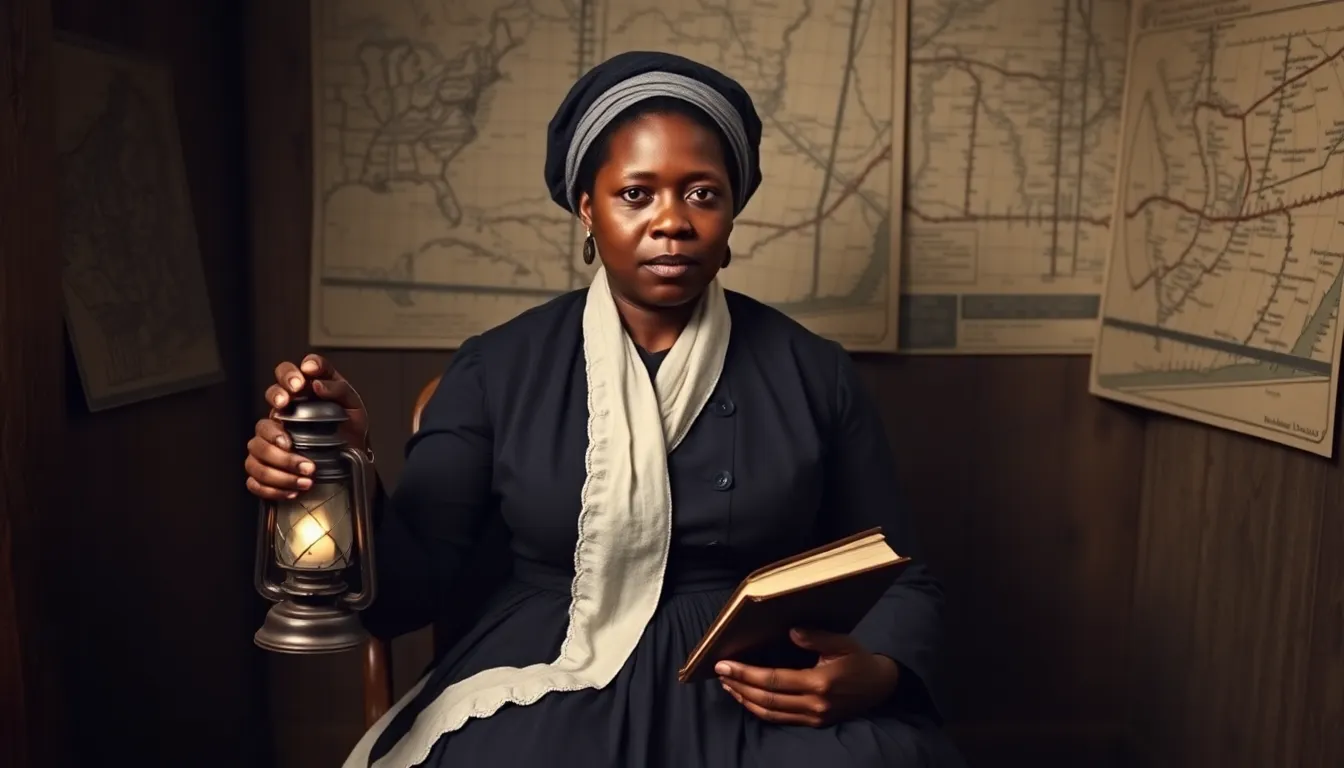
Historical Context
Harriet Tubman lived during a period of intense conflict over slavery in the United States. Born into the system of chattel slavery in the early 1820s, she witnessed the expansion of the cotton economy in the Upper South, the rise of abolitionist movements in the North, and the sectional tensions that culminated in the Civil War (1861‑1865). The era was marked by legal frameworks such as the Fugitive Slave Act of 1850, which mandated the return of escaped enslaved people, and by growing networks of resistance, notably the Underground Railroad—a loosely organized series of safe houses and guides that helped enslaved individuals reach freedom in free states or Canada. Tubman’s lifetime also spanned the Reconstruction era (1865‑1877), when formerly enslaved people struggled for civil rights amid persistent white supremacist backlash. Understanding these macro‑structures is essential to gauge the significance of Tubman’s agency and the risks she continually assumed.
Early Life and Formation
The precise date of Tubman’s birth is uncertain; most scholars place it between 1820 and 1825, with 1822 being the most commonly cited year. She was born Araminta “Minty” Ross near Dorchester County, Maryland, a region dominated by tobacco plantations and a dense enslaved population. Tubman’s parents, Ben Ross and Harriet Green, were enslaved persons belonging to the Brodess family. The family lived on a 32‑acre farm, where Tubman performed field labor and domestic work from an early age. Her childhood was marked by harsh treatment, including physical punishment, a common feature of slavery that contemporary accounts note but cannot fully quantify.
In 1844, Tubman suffered a severe head injury when an overseer struck her with a heavy metal weight. Modern medical historians suggest the trauma caused lasting neurological effects, including episodes of seizures, severe headaches, and an altered sense of hearing. These symptoms persisted throughout her life yet did not deter her from undertaking physically demanding missions. Tubman remained illiterate—no documentation confirms formal schooling—and instead acquired skills through oral tradition, communal storytelling, and hands‑on experience, which later proved vital for clandestine communication.
Several formative influences shaped Tubman’s resolve. The religious fervor of the African‑American Methodist communities in Maryland exposed her to the revivalist preaching of the Second Great Awakening. Tubman’s lifelong devotion to Christianity, particularly the doctrine of divine deliverance, is evident in her later statements that she felt guided by “the Lord’s hand” during her rescue missions. Moreover, the enslaved networks of mutual aid, in which families shared information on slaveholders’ movements and assisted escaped relatives, gave her early exposure to the operative logic of the Underground Railroad.
Although primary sources about Tubman’s early years are scarce, oral histories collected by later biographers—most notably by historian Kate Clifford Larson—provide the backbone of this narrative, while acknowledging gaps and potential embellishments that arise from the passage of time.
Role in Major Events
By the early 1850s, Tubman had escaped bondage herself, traveling northward via a network of free Black and white abolitionists who guided her to Philadelphia. While she initially sought sole freedom, the plight of her family and other enslaved individuals compelled her to return to Maryland as a conductor on the Underground Railroad. Between 1850 and 1860, Tubman is credited with leading at least 13 missions that rescued more than 70 enslaved people, though the exact number varies among contemporary accounts. Each expedition required meticulous planning: gathering intelligence on slaveholder patrols, securing safe houses, and navigating the waterways of the Chesapeake Bay, often under cover of night.
In 1859, Tubman’s reputation as a steadfast operative drew the attention of John H. B. McClellan, a Union Army officer. When the Civil War erupted, Tubman leveraged her knowledge of Southern terrain and her connections to enlist as a scout, spy, and nurse for the Union Army—a rare role for an African‑American woman. She worked closely with Colonel James Montgomery’s 1st South Carolina Volunteers, also known as the Colored Cannon. Tubman’s most celebrated military contribution occurred in 1863, when she guided a raid that liberated more than 700 enslaved individuals from the Combahee River plantation in South Carolina, an operation later termed the Combahee River Raid. This mission, coordinated with Union naval forces under Commander Samuel P. Lee, demonstrated her strategic acumen and cemented her status as a key military asset.
Beyond direct action, Tubman also served as an adviser to the U.S. Colored Troops, counseling leaders on recruitment and morale. She attended the Women’s Relief Corps meetings, where she advocated for veterans’ benefits, particularly for formerly enslaved soldiers who were denied pensions. Tubman’s wartime service extended to humanitarian assistance: she worked at the Freedmen’s Bureau, aiding formerly enslaved families in the transition to freedom, and later assisted in establishing schools for Black children in Maryland.
Following the war, Tubman settled in Auburn, New York, where she purchased land in 1869—one of the few Black women of her era to own property outright. She transformed part of the farm into a refuge for aged and destitute African‑American women, known as the Harriet Tubman Home for the Aged. The site also became a focal point for suffrage activism. Tubman collaborated with leading women’s rights advocates, including Susan B. Anthony and Elizabeth Cady Stanton, lending her moral authority to the cause of universal suffrage. Although she never held a formal office within the women’s movement, her speeches—often delivered in the late 1880s—underscored the intersection of racial and gender equality.
Despite her extensive public engagement, Tubman’s personal finances remained modest. She received a modest pension from the U.S. government for her Civil War service. Contemporary estimates, adjusted for inflation, suggest her net worth at the time of her death in 1913 was likely under $5,000 (approximately $140,000 in 2024 dollars), though precise figures are unavailable due to inconsistent record‑keeping.
Allies, Opponents, and Debate
Tubman’s allies spanned racial and gender lines. Among Black allies, Frederick Douglass emerged as a prominent supporter; he publicized Tubman’s exploits in his newspaper, The North Star, and advocated for her pension. William Still, a Philadelphia abolitionist and key figure in the Underground Railroad, provided logistical assistance and documented many of Tubman’s early rescue missions in his seminal work, “The Underground Railroad Records.” White allies included the abolitionist activist Harriet Beecher Stowe, who referenced Tubman’s daring in her 1852 novel “Uncle Tom’s Cabin,” and political leaders such as President Abraham Lincoln, who, though not directly corresponding with Tubman, created the strategic environment enabling her military contributions.
Opposition to Tubman was equally formidable. Slaveholders in Maryland, including the Brodess family, pursued her under the Fugitive Slave Act, offering bounty rewards for her capture. The Confederacy considered her a dangerous insurgent; Southern newspapers labeled her a “terrorist” and demanded her execution. Within the Union, some military officials initially hesitated to trust an African‑American woman with intelligence tasks, reflecting broader racial prejudices of the era.
Modern scholarship has debated aspects of Tubman’s legend. Some historians argue that popular narratives have amplified the numbers rescued, citing a lack of contemporaneous documentation for each individual. Others emphasize that the oral testimonies of surviving participants, while valuable, may contain embellishments—a common phenomenon in resistance histories. Additionally, discussions persist regarding Tubman’s role in the women’s suffrage movement; while she participated in meetings, the extent of her influence relative to leading suffragists remains contested among gender historians.
Legacy and Interpretation
Harriet Tubman’s legacy has undergone significant reinterpretation over time. In the early 20th century, African‑American communities commemorated her as a martyr of liberation, erecting churches and schools in her name. The 1974 designation of her Auburn home as a National Historical Park marked a governmental acknowledgment of her national significance.
During the Civil Rights Movement of the 1950s and 1960s, Tubman’s image served as an emblem of Black resistance. Activists invoked her courage during sit‑ins and voter registration drives, and her likeness appeared on newspaper covers and protest banners. In recent decades, scholars have placed Tubman within a broader trans‑Atlantic abolitionist framework, highlighting her connections to British anti‑slavery societies and Caribbean emancipation narratives.
Public memory continues to evolve. In 2016, the United States Treasury announced plans to feature Tubman on the $20 bill—a symbolic move praised as progressive, though delayed by political controversy. The initiative sparked renewed scholarly interest, resulting in a proliferation of academic monographs, documentaries, and museum exhibitions that aim to balance mythic reverence with critical source analysis.
Tubman’s impact on contemporary discourse extends beyond historical study. She is frequently cited in discussions of gendered leadership, illustrating how women of color have navigated intersecting oppressions to effect systemic change. Her strategic use of covert networks informs modern theories of social movement organization, particularly in the fields of diaspora studies and security studies.
Overall, Harriet Tubman’s life epitomizes the convergence of personal agency and collective struggle. While definitive figures regarding the total number of individuals she rescued, her precise financial holdings, or the complete scope of her political influence may remain elusive, the weight of documentary evidence affirms her status as an extraordinary actor in the fight against slavery and for human liberty.