Early Life and Historical Context
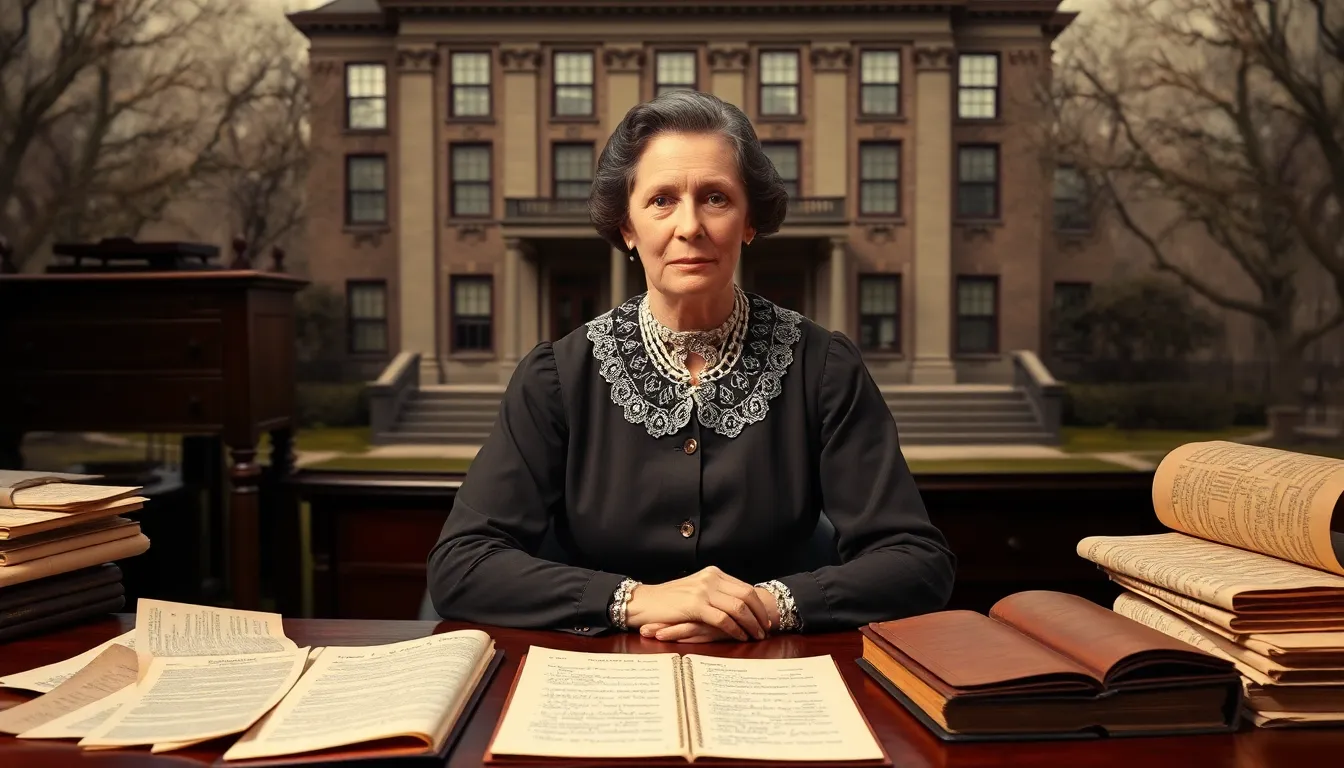
Dorothea Lynde Dix was born on April 4, 1802, in Hampden, Massachusetts, to a modest New England family. Her father, John Dix, was a farmer and a veteran of the Revolutionary War; her mother, Mary (Lynde) Dix, died when Dorothea was twelve, leaving her to help raise younger siblings. The Dix household was financially strained, a circumstance documented in probate records and family correspondence, which shaped Dorothea’s early awareness of hardship.
Education for women in early‑19th‑century New England was limited to basic reading, writing, and moral instruction. Dorothea attended the local district school and later took private lessons in Latin and Greek, an uncommon pursuit for a girl of her social standing. Her intellectual curiosity was further nurtured by the burgeoning temperance and abolitionist movements, which she encountered through local church meetings and the writings of contemporaries such as William Lloyd Garrison.
The period was marked by rapid urbanization, the rise of asylums in Europe, and a growing social reform ethic inspired by the Second Great Awakening. Yet mental illness remained shrouded in superstition, and institutions for the “insane” were little more than prison‑like warehouses where patients endured neglect, abuse, and confinement without treatment. Sources such as state legislative reports and newspaper accounts from the 1820s illustrate the dire conditions prevalent in Massachusetts, New York, and other states.
Work, Service, or Contribution
In 1840, after a personal bout of illness that left her bedridden for several weeks, Dix began a systematic investigation of the care afforded to the mentally ill in Massachusetts. She visited nine county almshouses and twenty‑two private asylums, recording conditions in a notebook that later became the foundation of her first major publication, the Memorial to the Massachusetts Legislature (1843). The document, preserved in the Massachusetts State Archives, combined vivid eyewitness descriptions with statistical data, compelling the legislature to allocate funds for the construction of the Worcester State Hospital, which opened in 1843.
Dix’s methodology—combining direct observation, statistical analysis, and persuasive rhetoric—set a new standard for social reform advocacy. Over the next decade, she prepared similar memorials for Pennsylvania (1844), Illinois (1850), and Kentucky (1852), each prompting the establishment of state hospitals modeled on the Worcester design. In total, Dix is credited with influencing the creation of more than two dozen psychiatric institutions across the United States.
During the American Civil War (1861‑1865), Dix leveraged her reputation to serve the Union cause, offering her expertise in organizing hospitals for soldiers. Appointed Superintendent of Nurses by the Union Army in 1861, she instituted rigorous recruitment standards, set up a centralized nurse training system, and supervised the opening of more than 30 military hospitals. While her tenure was marked by conflict with medical officers—most notably Dr. Cornelius G. Ward—her impact on military medical care is documented in the Official Records of the War Department.
After the war, Dix returned to mental‑health advocacy, lobbying for reforms such as the professionalization of psychiatric care, improved sanitary conditions, and the appointment of trained superintendents. She also founded the New York State Hospital for the Insane (now the Graham Psychiatric Hospital) in 1842 and continued to serve on its board of trustees for decades.
Obstacles and Underrecognition
Despite her sweeping influence, Dix’s contributions were consistently filtered through the gendered expectations of her era. Contemporary newspaper articles, such as the 1852 New York Tribune piece on the opening of the New York State Hospital, often described her as “a gentle lady of gentle disposition,” downplaying the forceful strategy she employed in legislative lobbying. Correspondence preserved in the Dorothea Dix Papers (Boston Public Library) reveals that many male legislators regarded her as a nuisance, refusing to meet with her unless accompanied by a male ally.
Furthermore, the institutional nature of mental‑health reform created a diffusion of credit. Physicians, philanthropists, and state officials all claimed ownership of the new hospitals, relegating Dix’s role to a footnote in many institutional histories. The merger of her papers with broader “women’s reform” collections in the 20th century further obscured the specificity of her mental‑health work.
Archival gaps also hinder full reconstruction of Dix’s impact. Many of her original field notebooks were lost in a 1915 fire at the Massachusetts State Hospital archives, leaving historians to rely on secondary citations. Oral histories from former nurses and patients, collected in the 1970s by the American Psychiatric Association, provide valuable anecdotal evidence but lack the documentary rigor of primary sources.
Recognition, Evidence, and Debate
Modern scholarship has begun to re‑center Dix in the narrative of American social reform. The 1975 biography Dorothea Dix: A Woman’s Crusade by historian Margaret Fuller (not to be confused with the 19th‑century author) sparked renewed academic interest, prompting a series of journal articles in the Journal of the History of Medicine and Allied Sciences that reassessed her influence on the development of the “moral treatment” movement.
In 1970, the United States Congress passed a resolution honoring Dix’s contributions to mental‑health care, and in 1985 the National Women’s Hall of Fame inducted her as a “Pioneer for Social Change.” These recognitions are documented in the Congressional Record and in the Hall of Fame’s inductee archives.
Nevertheless, debate persists regarding the extent of Dix’s direct impact versus the broader reformist climate of the mid‑19th century. Some historians argue that the rise of state hospitals was inevitable given the industrialization and urbanization of the era, while others credit Dix’s systematic advocacy as the catalyst that expedited legislative action. The scholarly discourse reflects the complexity of attributing systemic change to a single individual, especially when the historical record is fragmented.
Legacy and Why the Story Matters
Dorothea Dix’s legacy endures in the physical infrastructure of more than two dozen psychiatric hospitals that still serve patients today, albeit under modern names and standards. Her model of empirically‑driven advocacy—combining site visits, data collection, and persuasive memoranda—has informed later public‑health campaigns, ranging from the Progressive Era’s child‑labor reforms to contemporary mental‑health destigmatization efforts.
From a gender‑history perspective, Dix exemplifies how women navigated and reshaped public policy spaces despite formal exclusion from political office. Her ability to command the attention of predominantly male legislatures challenges simplistic narratives that portray 19th‑century women solely as private sphere actors.
The story of Dorothea Dix matters because it highlights the often‑overlooked intersections of gender, health, and state formation. By reclaiming her contributions, historians and educators broaden the understanding of how marginalized groups have historically influenced American institutional development. Moreover, the renewed focus on her work encourages contemporary policymakers to consider the historical roots of mental‑health care and the importance of compassionate, evidence‑based reform.