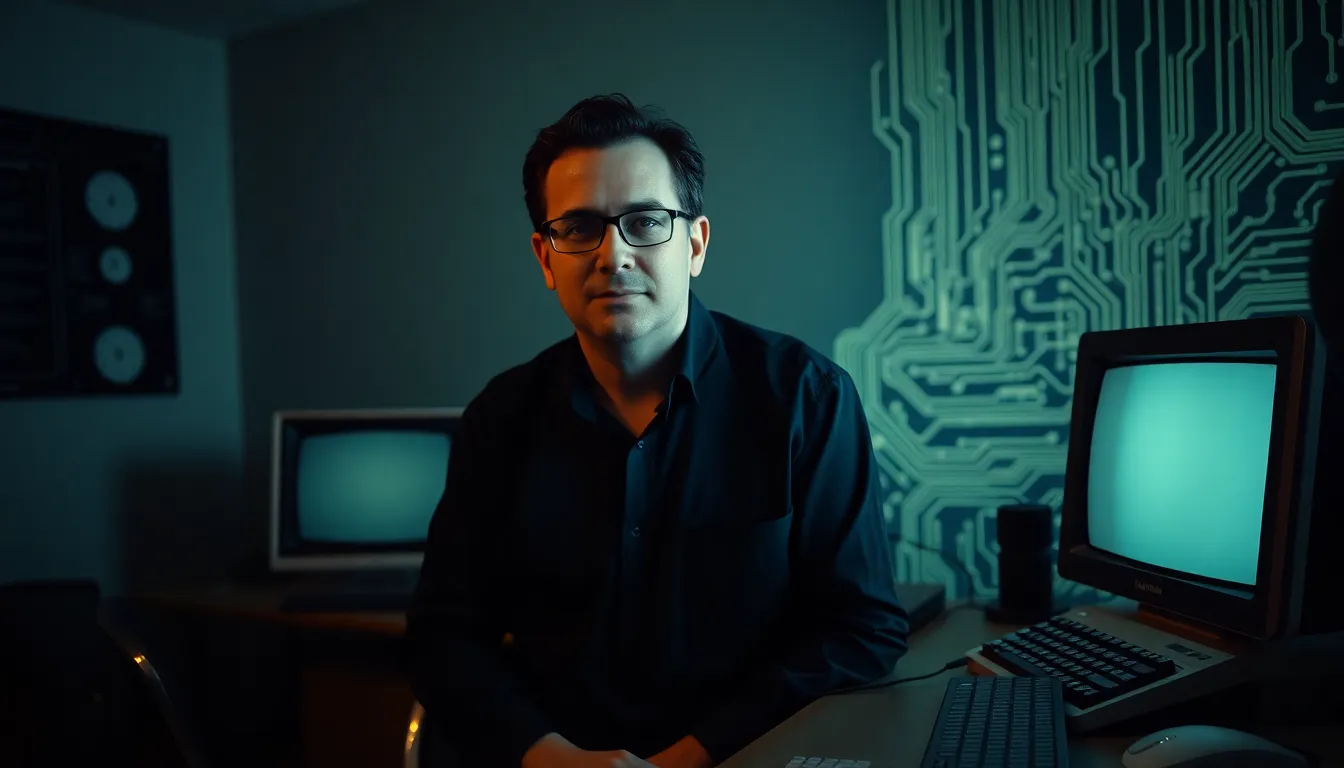
Early Life and Technical Beginnings
Kevin David Mitnick was born on 6 August 1963 in Van Nuys, California, United States. Growing up in a middle‑class household, he showed an early fascination with radios and electronics. By the early 1970s he had become interested in the emerging world of computers, a field still limited to hobbyist clubs and university labs. Mitnick attended James Monroe High School in the San Fernando Valley, where he joined a local computer club and began experimenting with the few accessible terminals and bulletin‑board systems (BBS) of the era.
In the late 1970s and early 1980s, Mitnick taught himself the fundamentals of telephone switching systems, an area known as social engineering, and discovered how to manipulate phone company operators to obtain unauthorized access codes. This skill set would become a hallmark of his early exploits, allowing him to explore corporate networks without needing sophisticated hardware.
Breakthrough in Technology and Public Recognition
Mitnick’s first documented intrusion occurred in 1981 when he accessed a computer system at the Pacific Bell telephone company using a cloned switchboard badge. Over the following years, he penetrated a series of high‑profile networks, including those of Digital Equipment Corporation (DEC), Nokia, and IBM, primarily by exploiting weak passwords and exploiting trust in human operators. By the mid‑1990s his activities attracted the attention of federal authorities, who labeled him the “most wanted computer criminal” in the United States.
The public breakthrough came in 1995 when the FBI placed Mitnick on a list of ten most‑wanted cybercriminals, and his subsequent arrest received extensive media coverage. The case highlighted the emerging legal and societal challenges surrounding computer security, and Mitnick became a symbol of the ambiguous line between curiosity‑driven hacking and criminal conduct.
Major Projects, Teams, Platforms, and Career Milestones
Following his 1995 arrest, Mitnick was charged with several counts of computer fraud, wire fraud, and illegal interception of communications. After a high‑profile pre‑trial detention, he pleaded guilty and was sentenced in 1999 to 46 months in prison, three years of supervised release, and a permanent ban on using computers without permission.
During his incarceration Mitnick began to reflect on the broader implications of security vulnerabilities. Upon release, he transitioned to a legitimate role in information security. In 2000 he founded Mitnick Security Consulting, a firm that offered penetration‑testing services, security awareness training, and incident response. His expertise, once criminal, was now sought after by Fortune 500 corporations, governmental agencies, and academic institutions.
Mitnick authored two influential books. The first, Ghost in the Wires: My Adventures as the World’s Most Wanted Hacker (2005), is an autobiographical account of his hacking years, written with William L. Simon. The second, The Art of Deception: Controlling the Human Element of Security (2002), focuses on social engineering techniques and has become a standard text in security curricula. Both works contributed to public awareness of human factors in cybersecurity.
Beyond consulting, Mitnick has been a frequent speaker at conferences such as DEF CON, Black Hat, and RSA, where he presents case studies of his past intrusions and discusses contemporary threat vectors. He has also contributed articles to industry publications, providing insights on password policies, phishing, and the evolving role of ethical hacking.
Creative, Technical, and Competitive Style
Mitnick’s approach to security emphasizes the psychological dimension of attacks. He argues that technical defenses are frequently circumvented by exploiting trust, curiosity, or complacency in personnel. His training programs therefore blend technical demonstrations with role‑playing exercises that simulate real‑world social engineering scenarios.
Technically, Mitnick favors a “low‑and‑slow” methodology, accessing systems incrementally to avoid detection, a contrast to noisy brute‑force attacks. This style reflects his early experiences with limited resources, where patience and ingenuity were essential.
Reception, Awards, and Controversies
Mitnick’s post‑incarceration career has been met with mixed reactions. Many security professionals commend his transformation from illicit hacker to educator, citing his contributions to the development of security awareness programs. The industry has honored him with the 2011 RSA Conference “Innovator” award for his impact on security education.
Conversely, some critics argue that the media’s fascination with Mitnick glamourized illegal hacking, potentially encouraging copycat behavior. The legal restrictions placed on Mitnick after his release—particularly the ban on using computers—generated debate over the fairness of lifelong penalties for non‑violent computer offenses.
Legacy and Digital Impact
Kevin Mitnick’s legacy is dual‑faceted. On one hand, his early intrusions underscored the vulnerabilities of corporate networks in an era before widespread intrusion detection systems. On the other hand, his later work has shaped modern security practices by highlighting social engineering as a critical attack vector. His books remain core reading in many cybersecurity curricula, and his consulting firm continues to influence corporate security policies.
Mitnick’s story also contributed to the evolution of United States cyber‑law, influencing amendments to the Computer Fraud and Abuse Act (CFAA) and informing policy discussions about proportionality in sentencing for digital offenses. In contemporary discourse, he is frequently cited as a cautionary example of how curiosity, when unchecked by ethical boundaries, can evolve into a career both condemned and celebrated.