Early Life and Education
Sir Richard Charles Nicholas Branson was born on 18 July 1950 in Blackheath, London, England, and grew up on a farm on the Isle of Wight after his family moved there in 1962. His parents, Edward “Eddie” James Branson, a former Royal Air Force flight officer, and Eve Branson (née Cooper), a former flight attendant, fostered an environment that celebrated adventure and ingenuity. Branson suffered from dyslexia, a condition that made conventional schooling challenging; he left formal education at age 16 to sit A‑level examinations as a private candidate.
While still a teenager, Branson exhibited an early entrepreneurial impulse by starting a student magazine called Student in 1966, funded in part by a bank loan on his mother’s mortgage. The publication, aimed at a youthful audience, struggled financially but gave Branson practical experience in cash‑flow management, advertising sales and distribution logistics. These formative years cultivated a risk‑tolerant mindset that would later define his business approach.
First Ventures and Breakthrough
In 1968, at age 18, Branson opened a mail‑order record shop called Virgin Records from a modest storefront in London’s Oxford Street. The name “Virgin” reflected Branson’s self‑perception as a newcomer to the music industry. The shop’s early success hinged on importing discounted American and European records that were unavailable in the UK market, exploiting a price‑sensitive niche during a period of rapid growth in youth consumer culture.
The breakthrough came in 1970 when Branson partnered with music industry veteran Simon Draper to launch the Virgin Records label. The label’s first major signing was the scandal‑riding Sex Pistols; the controversial release of “God Save the Queen” in 1977 propelled Virgin into the British mainstream and demonstrated Branson’s willingness to gamble on unconventional talent. By the early 1980s, Virgin Records had become the United Kingdom’s second‑largest record company, with a diversified roster that included the Rolling Stones (distribution), Mike Oldfield’s Tubular Bells, and the Human League. The eventual sale of Virgin Records to EMI in 1992 for £1 billion (approximately US$1.7 billion) marked Branson’s first massive liquidity event and provided seed capital for a broader diversification strategy.
Companies, Strategy, and Leadership
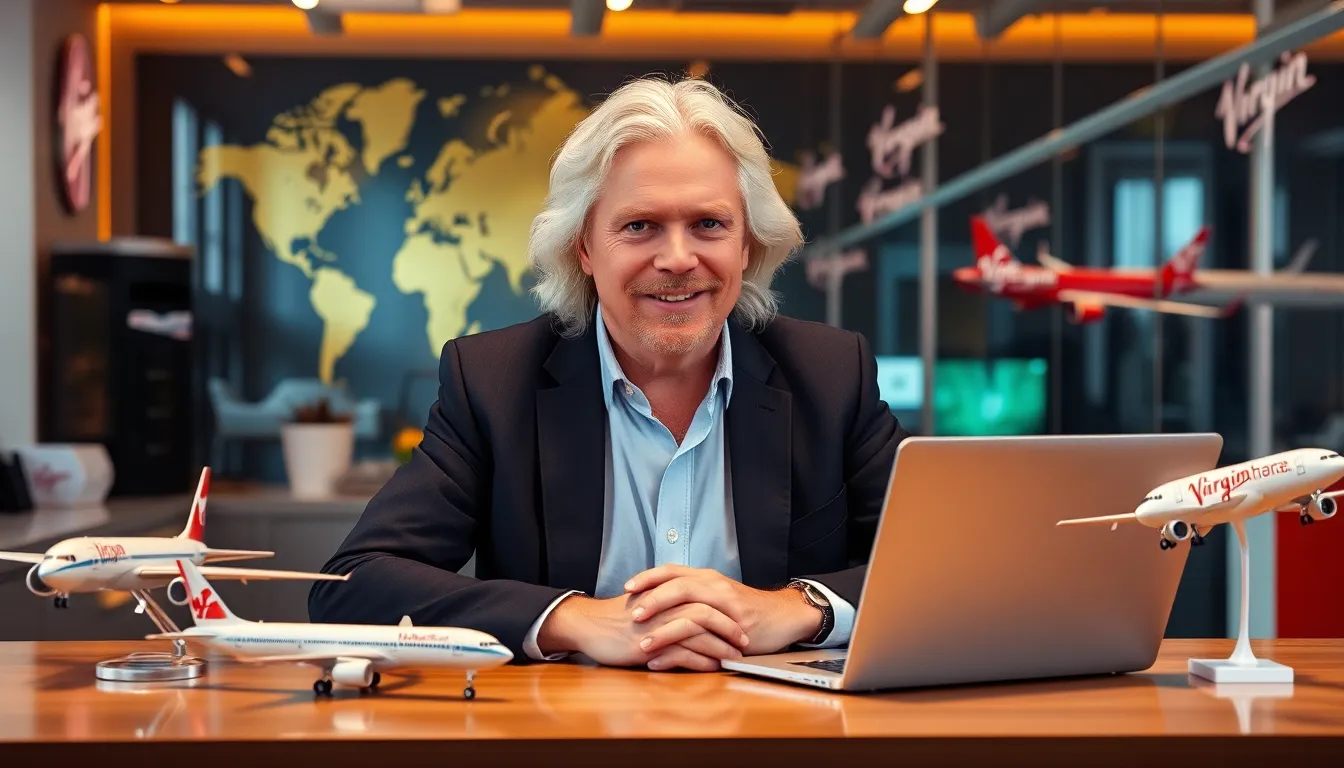
Following the record‑label success, Branson embarked on an aggressive expansion of the Virgin brand across unrelated sectors, a strategy scholars label “brand‑centric diversification”. The first non‑music venture was Virgin Atlantic Airways, launched in 1984 after Branson secured a contract to operate a transatlantic route between London and New York using a leased Boeing 747‑200. The airline’s value proposition—uncompromising service, high‑quality in‑flight amenities and a youth‑focused brand identity—challenged the duopoly of British Airways and Pan Am. Virgin Atlantic’s market entry coincided with deregulation of international air travel under the 1978 Bermuda Agreement reforms, providing a regulatory opening for new carriers.

Throughout the 1990s and 2000s, Branson replicated the Virgin model in finance (Virgin Direct, later rebranded Virgin Money), telecommunications (Virgin Mobile, launched in 1999 as the world’s first mobile virtual network operator), health care (Virgin Health Bank), and leisure (Virgin Galactic, Virgin Hotels). Each venture employed a common template: leveraging the Virgin brand to negotiate favorable partnership terms, using limited upfront capital by licensing the brand, and emphasizing customer experience as a differentiator. Notably, Virgin Mobile’s partnership with One2One (later T-Mobile UK) allowed Virgin to enter a capital‑intensive market without owning network infrastructure, a move that presaged later “asset‑light” strategies in the tech sector.
Leadership style has been described as charismatic, informal and risk‑tolerant. Branson openly cultivates a public persona—high‑profile stunts such as attempting world records in air and sea travel—that serves as both marketing and morale‑building. Internally, he promotes a flat hierarchy, encourages employee autonomy, and has instituted “idea‑banks” where staff can submit proposals directly to senior management. Critics argue that this style can blur the line between personal brand and corporate governance, especially when media attention overshadows substantive operational oversight.
Wealth, Public Image, and Controversies
Estimates of Branson’s net worth vary; Forbes listed his wealth at approximately US$5.2 billion in 2023, largely derived from holdings in the Virgin Group, private equity stakes, and royalties. The figure fluctuates with the performance of Virgin’s diversified portfolio, especially the privately held airline and space‑flight ventures.
Branson’s public image is tightly interwoven with the Virgin brand’s “disruptive‑entrepreneur” narrative. He has been a vocal advocate for environmental sustainability, launching the Virgin Earth Challenge in 2007 and investing in renewable‑energy projects through Virgin Green Fund. However, the same visibility has attracted scrutiny. Labor disputes have arisen at Virgin Atlantic, most prominently the 2015 strike by cabin‑crew over pay parity with rival carriers. Regulatory challenges have included a 2000 investigation by the UK’s Competition Commission into Virgin’s acquisition of the UK broadband provider Virgin Media, ultimately resulting in a divestiture of certain assets to maintain market competition.
Legal controversies have also featured. In 2006, Branson was named in a tax‑evasion inquiry concerning the use of offshore entities linked to Virgin’s Caribbean operations; the investigation concluded without charges, but it sparked public debate about the ethical responsibilities of high‑net‑worth individuals. Additionally, Virgin Galactic’s 2014 crash of SpaceShipTwo’s VSS‑Enterprise raised safety concerns and led to a Federal Aviation Administration (FAA) grounding; Branson publicly accepted responsibility for the setback and oversaw subsequent design revisions that led to the successful 2021 test flight of VSS‑Unity.
Philanthropy, Legacy, and Industry Impact
Branson’s philanthropic activities are coordinated through Virgin Unite, the charitable arm of the Virgin Group founded in 2004. Virgin Unite focuses on entrepreneurship, environmental sustainability, and social entrepreneurship. Notable initiatives include the Branson School of Entrepreneurship (launched in 2005) which partners with universities worldwide to provide mentorship and seed funding for student‑led ventures.
Beyond formal charities, Branson has pledged personal funds to disaster relief, most visibly after the 2004 Indian Ocean tsunami and during the COVID‑19 pandemic, where Virgin Pulse supplied mental‑health resources to frontline workers. He has also served on several advisory boards, including the World Economic Forum’s International Business Council, where he advocates for “stakeholder capitalism” and the integration of social metrics into corporate performance.
Branson’s impact on industry is multifaceted. In music, Virgin Records accelerated the shift toward artist‑friendly contracts and contributed to the rise of independent label culture. In aviation, Virgin Atlantic introduced a service‑centric model that forced legacy carriers to improve cabin experience and baggage allowances. Virgin Mobile and Virgin Media pioneered the “bundling” approach that combined mobile, broadband and television services, influencing the convergence strategies of telecom giants worldwide. Finally, Virgin Galactic’s commercial sub‑orbital tourism venture has catalyzed investment in the nascent space‑tourism market, prompting competitors such as Blue Origin and SpaceX to accelerate development timelines.
While Branson’s brand‑centric diversification has sometimes been critiqued as over‑extension, the enduring presence of Virgin subsidiaries across four continents illustrates a lasting legacy of challenging incumbents and reshaping consumer expectations. His entrepreneurial narrative, balanced with documented successes, setbacks, and public accountability, offers a case study in modern, media‑driven enterprise.