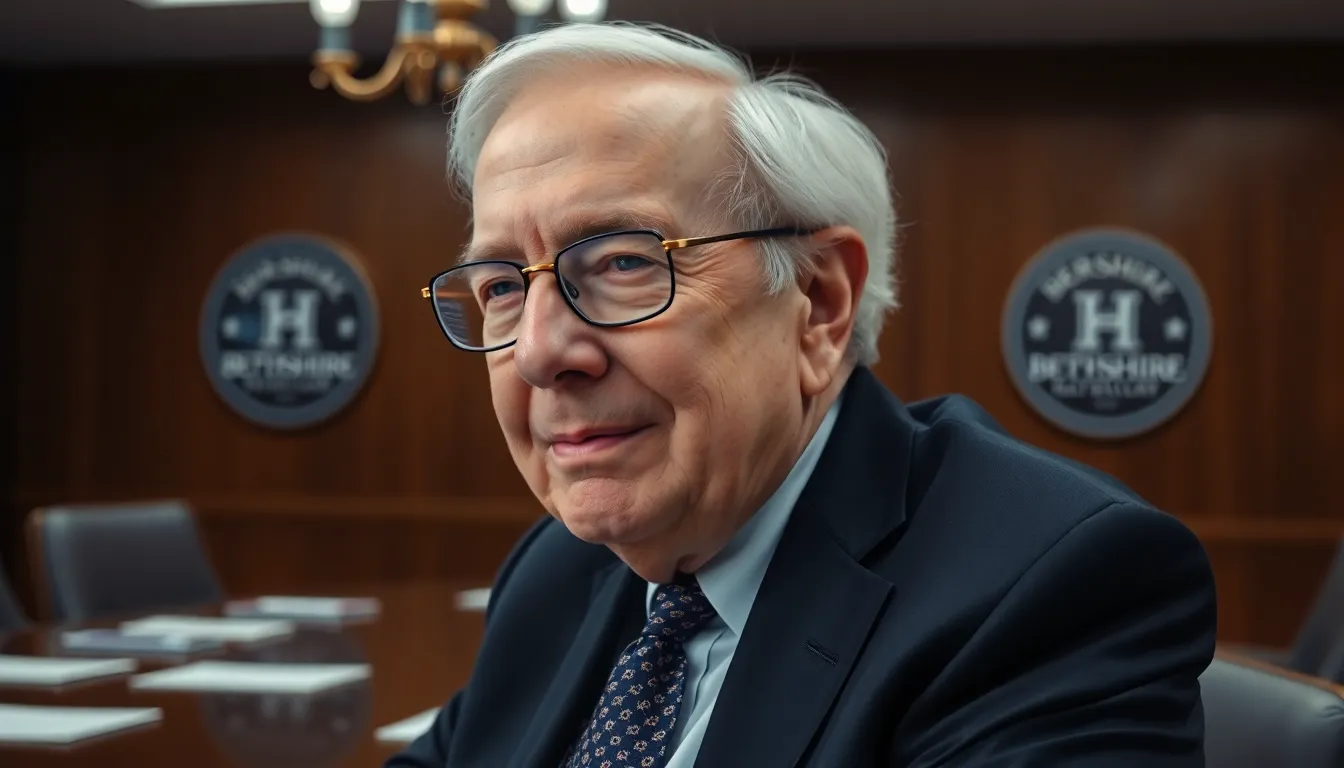
Explore Biographies of Business & Entrepreneurial Icons and discover the risks, ideas, wealth, and decisions behind major success stories.
Business & Entrepreneurial Icons
Entrepreneurs as Builders of Modern Economies
Business and entrepreneurial icons are more than wealthy individuals with famous companies. They are builders of systems, markets, habits, and possibilities. Their decisions can alter how people shop, communicate, travel, invest, work, eat, learn, and imagine the future. Some create products. Others create platforms. A few create entire ecosystems.
The biography of a business icon often begins with a simple question: what problem did this person notice before others took it seriously? Many great entrepreneurs are not merely inventors. They are interpreters of unmet demand. They see inefficiency, friction, scarcity, or dissatisfaction, then construct a commercial answer.
Business history is filled with people who changed ordinary behavior through extraordinary persistence. A founder may transform a garage experiment into a global technology company. A retailer may redesign the supply chain. A media entrepreneur may reshape public attention. A financial innovator may change how capital moves. The result is not only profit. It is structural influence.
Entrepreneurial icons matter because they reveal how ideas become institutions.
The Human Story Behind Commercial Success
Behind every major enterprise is a human story. There is ambition, anxiety, improvisation, sacrifice, and often a period of almost invisible struggle. Public success tends to look polished from a distance, but entrepreneurship is frequently untidy. It contains false starts, rejected pitches, fragile partnerships, cash shortages, legal complications, and difficult personal trade-offs.
The most compelling business biographies show that success is rarely linear. Founders may fail before they flourish. They may pivot from one idea to another. They may face ridicule before validation. They may spend years building credibility before the market finally understands their vision.
Entrepreneurial icons are often remembered for their triumphs, but their uncertainty is equally instructive. They acted before outcomes were guaranteed. That is the essential drama of business creation.
Early Life and Entrepreneurial Foundations
Family Background, Education, and First Ambitions
Many business icons show early signs of independence, curiosity, or commercial instinct. Some sell small items as children. Others repair machines, read obsessively, manage family responsibilities, or question why existing systems work so poorly. Early experiences can become the hidden scaffolding of later achievement.
Family background may provide privilege, pressure, instability, or inspiration. A supportive household can offer confidence and resources. A difficult childhood can create urgency and resilience. Education may open doors, but it does not always follow a conventional route. Some entrepreneurs attend elite universities. Others leave school early, learn through apprenticeship, or build knowledge through relentless self-study.
What matters most is not the credential alone. It is the formation of judgment. Entrepreneurs must learn to observe markets, evaluate risk, understand people, manage uncertainty, and endure delayed rewards. These traits often begin long before the first company is founded.
Ambition can be quiet at first. Then it becomes kinetic.
Curiosity, Risk-Taking, and the Birth of Opportunity
Entrepreneurship requires a particular relationship with uncertainty. Most people avoid unclear outcomes. Entrepreneurs study them. They ask what might happen if a product were cheaper, faster, simpler, more beautiful, more accessible, or more scalable.
Curiosity is often the first engine. It pushes a future founder to examine how things are made, priced, distributed, marketed, and improved. Risk-taking follows, but not always recklessly. The best entrepreneurs are not simply gamblers. They are calculated risk architects. They test, iterate, measure, adapt, and preserve enough flexibility to survive mistakes.
Opportunity is rarely obvious to everyone at the beginning. A market may look too small. A technology may seem impractical. Consumers may not yet know what they want. Investors may hesitate. Competitors may laugh. Yet business icons often recognize latent demand before it becomes visible.
Their advantage is perceptual. They notice the gap before the crowd arrives.
Building Companies and Defining Markets
From Small Ideas to Scalable Enterprises
Every major company begins with something smaller than its eventual reputation. A prototype. A service. A store. A website. A workshop. A local customer base. A founder’s conviction. Scaling that small beginning into a durable enterprise requires more than enthusiasm.
A scalable business must develop repeatable systems. It needs operations, hiring, distribution, technology, accounting, compliance, customer support, branding, and management discipline. Many founders are excellent at starting but weaker at scaling. Entrepreneurial icons distinguish themselves by learning how to move from personal hustle to organizational architecture.
This transition can be difficult. The founder must delegate. Teams must be built. Processes must replace improvisation. Culture must be protected without becoming rigid. A company that grows too quickly may collapse under its own velocity. A company that grows too slowly may be outpaced.
The art of building a company lies in balancing vision with execution.
Innovation, Strategy, and Competitive Advantage
Innovation is often associated with invention, but in business it can take many forms. A company may innovate through design, logistics, pricing, customer experience, branding, data, manufacturing, software, or business model structure. Some entrepreneurial icons succeed not because they invent something entirely new, but because they make something dramatically better.
Strategy gives innovation direction. It answers essential questions. Who is the customer? What pain point matters most? What can the company do differently from competitors? What should be ignored? What must be protected?
Competitive advantage may come from patents, network effects, brand loyalty, cost efficiency, speed, talent, distribution, proprietary technology, or trust. The strongest entrepreneurs understand that a good idea is not enough. A defensible position is necessary.
Markets are not static. They are contested terrain. Business icons survive because they adapt without losing strategic coherence.
Leadership, Crisis, and Public Reputation
Decision-Making Under Pressure
Leadership is tested most severely during crisis. Economic downturns, lawsuits, product failures, reputational damage, supply disruptions, technological shifts, and internal conflict can expose the fragility of even successful companies. In these moments, the entrepreneur’s temperament becomes consequential.
Some leaders respond with calm analysis. Others rely on speed and instinct. The best often combine urgency with discernment. They absorb incomplete information, make difficult decisions, communicate clearly, and accept responsibility for consequences.
Pressure also reveals values. A company may claim to prioritize customers, employees, quality, innovation, or integrity. Crisis shows whether those principles are ornamental or operational.
Entrepreneurial icons are not immune to mistakes. Many make serious errors. What matters is how they respond. Do they conceal, blame, learn, repair, or evolve? The biography of a business leader often turns on these moments.
Success, Controversy, and the Burden of Visibility
As entrepreneurs become more influential, their public visibility increases. Success brings admiration, but also scrutiny. Business icons may be praised as visionaries and criticized as monopolists, disruptors, opportunists, or ruthless competitors. Sometimes the criticism is unfair. Sometimes it is necessary.
Large companies affect workers, customers, suppliers, communities, competitors, governments, and the environment. The larger the enterprise, the larger the ethical perimeter. A founder’s choices can influence wages, privacy, urban development, market concentration, labor practices, and public discourse.
This visibility creates a paradox. Entrepreneurs are celebrated for boldness, yet questioned when their boldness creates harm. They are admired for efficiency, yet criticized when efficiency appears inhumane. Their lives become public case studies in ambition, power, accountability, and consequence.
A serious biography must include both achievement and complexity.
Wealth, Influence, and Social Impact
Net Worth, Ownership, and Business Value
Business icons are often associated with wealth, especially when their companies become publicly traded, globally recognized, or privately valued at enormous sums. Net worth can become a major point of public fascination. Yet wealth figures require careful interpretation.
An entrepreneur’s net worth is usually tied to ownership stakes, stock prices, private company valuations, dividends, real estate, investments, and other assets. These values can fluctuate dramatically. A billionaire on paper may hold much of that wealth in company shares rather than liquid cash.
Financial success can indicate market confidence, but it is not the only measure of entrepreneurial importance. Some founders build influential companies without becoming the richest people in their industry. Others accumulate extraordinary wealth while attracting debate about inequality, taxation, labor, and social responsibility.
Wealth is part of the story. It is not the entire story.
Philanthropy, Legacy, and Cultural Power
Many entrepreneurial icons eventually turn toward philanthropy, public initiatives, education, science, healthcare, climate action, or civic projects. Some give quietly. Others build large foundations. A few use philanthropy to reshape public policy and institutional priorities.
Legacy, however, is not created only through donations. It is also formed through products, employment, industry standards, leadership models, and cultural imagination. A business icon may inspire millions to start companies, study technology, pursue financial independence, or think differently about what is possible.
Cultural power can outlast commercial cycles. A brand may become part of daily language. A founder’s philosophy may become a management doctrine. A company’s design choices may influence entire industries.
The most enduring entrepreneurs do not merely accumulate capital. They change the grammar of economic life.
Lessons from Entrepreneurial Icons
Patterns Behind Long-Term Success
The stories of business and entrepreneurial icons reveal recurring patterns. They are not identical, but they often share certain habits: intense curiosity, tolerance for uncertainty, disciplined execution, customer awareness, adaptability, strategic focus, and resilience after failure.
Many also possess an unusual relationship with time. They can act quickly in the present while building for the distant future. They understand that short-term discomfort may be necessary for long-term advantage. They are willing to revise tactics without abandoning the central mission.
Another common pattern is the ability to attract talent. Great companies are rarely built by founders alone. They require engineers, designers, operators, marketers, managers, investors, advisors, and frontline workers. Entrepreneurial icons often become magnets for people who believe in the mission.
Success is not a single trait. It is an ecology of habits.
Why Their Stories Continue to Inspire
Business biographies continue to inspire because they show transformation in motion. They show how a person can identify a problem, build a solution, gather resources, face opposition, and create something that did not previously exist. This is powerful because it makes change seem actionable.
Entrepreneurial stories also contain caution. They remind readers that ambition can create progress, but it can also create excess. Innovation can liberate, but it can disrupt lives. Wealth can enable philanthropy, but it can also magnify inequality. Leadership can inspire, but it must be accountable.
The best business icons are not interesting because they are flawless. They are interesting because their lives contain movement: from obscurity to influence, from idea to institution, from risk to consequence.
To study business and entrepreneurial icons is to study the mechanics of possibility. Their biographies reveal how markets are made, how companies rise, how leadership is tested, and how individual vision can reshape the world.
Palmer Luckey is an American entrepreneur best known for founding Oculus VR, the company that pioneered modern virtual‑reality headsets, and later co‑founding defense technology firm Anduril Industries. His career spans rapid growth, high‑profile acquisitions, legal disputes, and significant philanthropic activity.
Peter Thiel is a German‑born American entrepreneur and venture capitalist whose early work on PayPal helped shape the modern internet economy. He later founded Palantir, co‑founded Founders Fund and has become known for both high‑profile investments and controversial public statements.
Bill Gates, co‑founder of Microsoft and leading global philanthropist, transformed personal computing and later devoted his wealth to health, education, and climate initiatives.
Brian Tracy is a Canadian‑born author, speaker and trainer known for his work on personal development, sales, and productivity. The biography outlines his early life, career milestones, business activities, wealth estimates and charitable work.
Reid Hoffman is an American internet entrepreneur, venture capitalist and author best known for co‑founding LinkedIn. His career spans early pay‑to‑search ventures, a pivotal role at PayPal, and a long‑standing presence in Silicon Valley investing.
Rupert Murdoch, the Australian-born media entrepreneur, built a global publishing empire that spans newspapers, television, and film. This biography examines his early life, business strategies, controversies, and lasting influence on the media industry.
Elon Musk is a South African‑born American entrepreneur who has driven major advances in electric vehicles, solar power, and energy storage. His work through Tesla and SolarCity reshaped the renewable‑energy market while his public profile sparked both admiration and controversy.
Sol Price (1916‑2009) was an American retail pioneer who founded Price Club, a forerunner of the modern wholesale‑membership warehouse model that later merged with Costco. His innovations reshaped bulk retailing and left a lasting legacy in supply‑chain efficiency and consumer pricing.
Robert Langer is a prolific American bioengineer and serial biotech entrepreneur whose research has spawned more than 80 companies and transformed drug delivery and tissue engineering.
Larry Page, co‑founder of Google, transformed online search into a global advertising platform. This biography outlines his early life, entrepreneurial ventures, leadership of Alphabet, wealth, public perception, and philanthropic activities.
Shai Agassi is an Israeli entrepreneur best known for founding Better Place, a pioneering venture aimed at building electric‑vehicle infrastructure. His career spans software, venture capital, and influential efforts to reshape the automotive market.
Jeff Bezos, founder of Amazon and Blue Origin, is a prominent American entrepreneur whose ventures reshaped e‑commerce, cloud computing, and commercial space travel.
Carlos Slim Helú, the Mexican telecom magnate, built a diversified empire that made him the richest person in the world for several years. This neutral biography examines his early life, business strategy, wealth, controversies, philanthropy and lasting impact on the telecommunications industry.
John Pierpont Morgan (1837–1913) was an American financier whose banks helped shape the United States’ industrial expansion, railroad network, and monetary system during the Gilded Age and Progressive Era.
Michael Bloomberg built a global financial data empire, served three terms as New York City mayor, and became a leading philanthropist. This biography examines his early life, business achievements, public service, and lasting influence.
Ralph Lauren, the American fashion entrepreneur behind the iconic Polo brand, transformed a modest tie business into a global lifestyle empire, influencing design, branding, and philanthropy.
Ray Kroc transformed a single roadside hamburger stand into the world’s largest fast‑food chain. His entrepreneurial drive, franchising model, and aggressive expansion reshaped American dining and global business practices.
Tony Robbins is a bestselling author, motivational speaker, and entrepreneur whose seminars, coaching programs, and philanthropic activities have shaped the modern self‑help industry.
Andrew Carnegie (1848–1919) rose from a poor Scottish immigrant to dominate the American steel industry, later devoting his wealth to extensive philanthropy. His career reflects the opportunities and tensions of the Gilded Age.
Estée Lauder (1906–2004) transformed a modest family kitchen operation into a global cosmetics empire, pioneering modern beauty marketing and branding. Her entrepreneurial journey spanned five decades of product innovation, strategic acquisitions, and philanthropy.
Howard Hughes (1905‑1976) was a pioneering aviator, prolific industrialist, and one of the most enigmatic figures in 20th‑century American business. His ventures spanned film, aviation, telecommunications, and real estate, leaving a complex legacy of innovation, wealth, and controversy.
Martha Stewart transformed domestic arts into a global media empire, influencing home décor, cooking, and entrepreneurship. Her career spans publishing, television, retail, and a high‑profile legal battle, shaping modern lifestyle branding.
Simon Cowell is a British television producer and music executive whose talent‑show formats reshaped the global pop market. This biography traces his early life, business ventures, leadership style, controversies, philanthropy, and lasting industry impact.
Carl Icahn is an American billionaire investor and corporate raider known for his activist strategies that have reshaped numerous public companies. This biography outlines his early life, business career, wealth, controversies, philanthropy and lasting impact on modern finance.
Jeff Pulver is an American Internet telephony pioneer, founder of Free World Dialup and early investor in Vonage, known for shaping the VoIP industry through technology, advocacy, and venture investment.
James Thomas Sinegal is an American retail executive best known for co‑founding Costco Wholesale Corporation. His career spans more than five decades in wholesale merchandising, emphasizing low prices, employee satisfaction, and a distinctive membership model.
Warren Buffett is an American investor and philanthropist who built Berkshire Hathaway into a global conglomerate. His value‑investing approach, long‑term perspective, and public‑spending habits have made him a pivotal figure in modern business history.
Warren Buffett is an American investor and the chief executive of Berkshire Hathaway, known for his long‑term value‑investing approach, philanthropic commitments, and influence on modern corporate finance.
James Dehlsen is a Canadian entrepreneur who helped launch the modern wind‑power industry. He founded Zond Systems and later Global Energy Concepts, pioneering commercial turbine design, project development and early renewable‑energy financing.