Early Training and Background
Michael Jeffrey Jordan was born on February 17, 1963, in Brooklyn, New York, but his family moved to Wilmington, North Carolina, when he was a toddler. Growing up in a middle‑class household, Jordan was the fourth of five children of James and Deloris Jordan. His father, James, worked at the General Electric plant and emphasized discipline and hard work, while his mother encouraged academic achievement.
Jordan first displayed athletic promise on the basketball courts of Emsley A. Laney High School. Although he was cut from the varsity team as a sophomore—a setback that spurred an intense personal drive—he used the experience as motivation. He spent the offseason honing his jump shot, working on footwork, and emulating his favorite player, Julius Erving. Coach Clifton “Pop” Herring took notice of Jordan’s relentless work ethic, and by his junior year, Jordan earned a starting spot, averaging 20 points per game and leading Laney to the state playoffs.
During his senior year, Jordan’s performance attracted college scouts nationwide. He received a scholarship to the University of North Carolina at Chapel Hill, a program renowned for its disciplined coaching under Dean Smith. Smith’s emphasis on team concepts, defensive fundamentals, and mental preparation would become a blueprint for Jordan’s future approach to the game.
At UNC, Jordan quickly earned the nickname “Air” for his leaping ability. In the 1982 NCAA Championship game against Georgetown, he hit the game‑winning shot with 18 seconds left, securing his first national title and global attention. Over three collegiate seasons, Jordan averaged 17.7 points, 5.0 rebounds, and 1.8 assists per game, while being named the NCAA College Player of the Year in 1983 and 1984.
Competitive Career
Jordan entered the 1984 NBA Draft as the third overall pick, selected by the Chicago Bulls. His rookie season (1984‑85) saw him average 28.2 points per game, earning the NBA Rookie of the Year award and setting a then‑record for a rookie’s scoring average. The Bulls, previously a struggling franchise, began a rapid transformation under Jordan’s leadership.
From 1985 to 1993, Jordan led the Bulls to six NBA championships, captured in three distinct “title runs” (1991‑93). The first championship in 1991 came after defeating the Los Angeles Lakers in the Finals, where Jordan was named Finals MVP. The Bulls repeated in 1992, overcoming the Portland Trail Blazers, and completed a three‑peat in 1993 against the Phoenix Suns.
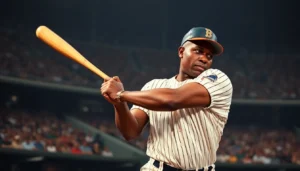
Jordan’s first retirement in October 1993 shocked the world. Citing the murder of his father, James Jordan, he left the sport to pursue a brief professional baseball career with the Chicago White Sox organization. His baseball stint, while not as successful as his basketball career, demonstrated his willingness to confront personal grief through new challenges.
Returning to the NBA in March 1995, Jordan announced his comeback with the famous line, “I’m back.” He rejoined the Bulls for the remainder of the 1994‑95 season, leading the team to the playoffs before falling short in the Eastern Conference Finals. However, the following two seasons (1995‑96 and 1996‑97) saw the Bulls dominate: a record‑breaking 72‑10 regular‑season record in 1995‑96, another title in 1996‑97, and a subsequent championship in 1998—marking Jordan’s sixth and final NBA title.
After the 1998 championship, Jordan retired for a second time, this time to become a part‑owner and President of Basketball Operations for the Washington Wizards. In 2001, he returned as a player for the Wizards, a move that blended on‑court contributions with mentorship. Over two seasons with Washington, Jordan averaged 22.9 points per game before retiring for a third and final time in 2003.
Major Wins, Records, and Data
Jordan’s statistical achievements are extensive and often serve as benchmarks for excellence. Key career numbers include:
- Regular‑season points per game: 30.12 (NBA all‑time leader)
- Career points: 32,292 (5th all‑time as of 2024)
- NBA championships: 6 (1991, 1992, 1993, 1996, 1997, 1998)
- NBA Finals MVPs: 6 (record)
- NBA Most Valuable Player awards: 5 (1988, 1991, 1992, 1996, 1998)
- All‑Star Game selections: 14 (record, tied with Kareem Abdul‑Jabbar)
- All‑NBA First Team selections: 10
- Defensive Player of the Year: 1988
- Scoring titles: 10 (record)
- Career playoff points per game: 33.4 (NBA record)
- 1985–86 season: 3,041 points, 30.2 ppg (first 30‑point‑per‑game season)
- 1995‑96 season: 72‑10 regular‑season record (most wins in a single season at the time)
Beyond raw numbers, Jordan’s impact is reflected in milestones such as being the first player to win the NBA MVP, Defensive Player of the Year, and All‑Star Game MVP in the same season (1988). He also led the league in steals three times (1988, 1990, 1993) and was selected to the NBA All‑Defensive First Team nine times.
Style, Rivalries, and Setbacks
Jordan’s playing style combined explosive athleticism, a high‑flight vertical leap, and a relentless competitive mindset. He was known for a mid‑range game that featured a fadeaway jumper, a post-up move that allowed him to score against larger defenders, and an uncanny ability to finish at the rim with either hand. Defensively, his quick hands and anticipation resulted in a career average of 2.3 steals per game, making him a perennial All‑Defensive selection.
Rivalries defined several eras of Jordan’s career. The most storied was with the Detroit Pistons’ “Bad Boys” (1987‑1990), a physically aggressive team that employed the “Jordan Rules” to limit his scoring. After three consecutive playoff defeats, Jordan elevated his game, leading to the Bulls’ first championship in 1991. Another notable rivalry was with the New York Knicks, especially in the 1993 Eastern Conference Finals, where a controversial foul by Knicks guard John Starks on Jordan sparked heated debate.
In addition to on‑court opposition, Jordan faced significant setbacks. The most painful injury occurred during the 1985‑86 season when he fractured his left foot, missing 64 games. He returned later in the season and still managed a 33.5 ppg average. The 1994–95 NBA lockout also limited his availability, and his 1995 comeback was marred by a devastating loss to the Orlando Magic in the 1995 Eastern Conference Finals.
Off the court, Jordan’s career was not without controversy. The 1998 “Flu Game” (Game 5 of the Finals against the Utah Jazz) saw him play while severely ill, raising questions about his health. However, his performance—scoring 38 points—bolstered his legend. Later, his involvement in the 1999 Chicago Bulls’ litigation regarding player fees and his 2006 financial dispute with the NBA over the “O’Brien case” added complexity to his public image.
Influence and Sporting Legacy
Michael Jordan’s influence extends far beyond the hardwood. Commercially, his partnership with Nike launched the “Air Jordan” line in 1984, creating a cultural phenomenon that merged sports apparel with fashion, music, and street culture. The brand generated billions in revenue and set the template for athlete‑driven endorsements.
Jordan’s on‑court success transformed the NBA’s global reach. Television ratings surged, and the league expanded its broadcasting contracts with networks such as NBC, ESPN, and later ABC, partially due to Jordan’s marketability. Internationally, Jordan’s games were broadcast in over 200 countries, spurring the growth of basketball programs in Europe, Asia, and Africa.
Strategically, Jordan’s emphasis on mental preparation, video analysis, and “killer instinct” influenced coaching philosophies. Coaches like Phil Jackson incorporated Jordan’s desire for a “triangle offense” that maximized spacing and teamwork, a model later adopted by many NBA teams.
Jordan’s legacy is also evident in the way he inspired subsequent generations of players. Stars such as Kobe Bryant, LeBron James, and Dwyane Wade have frequently cited Jordan as the primary influence on their work ethic and competitive drive. His dedication to perfecting fundamentals and his refusal to accept defeat set a standard that reshaped athlete development programs at the high school and collegiate levels.
In recognition of his contributions, Jordan was inducted into the Naismith Memorial Basketball Hall of Fame in 2009 (as an individual) and again in 2010 as a member of the “Dream Team” (1992 United States Olympic team). His jersey numbers 23 (Chicago) and 45 (Washington) were retired league‑wide, a unique honor reflecting his enduring impact.
Beyond sport, Jordan’s philanthropic efforts include the Michael Jordan Foundation, which supports youth education, health initiatives, and community development. In 2021, he pledged $100 million to various charitable causes, reaffirming his commitment to social responsibility.
Overall, Michael Jordan’s career illustrates a rare blend of athletic mastery, psychological resilience, and cultural influence that makes him an archetype of the modern sports icon.