Early Life and Influences
Fannie Lou Townsend was born on October 6, 1917, in Montgomery County, Mississippi, on a plantation owned by the Wallace family. She was the youngest of 20 children in a family that subsisted largely on sharecropping. The economic exploitation and racial segregation of the Jim Crow South formed the backdrop of her childhood. Formal schooling for Black children was limited; Hamer attended a one‑room schoolhouse for three years before leaving to work full‑time on the family farm. Her mother, Myrtie, was a devout Christian who taught Hamer the hymns and oral storytelling traditions that later shaped Hamer’s own preaching style.
In the 1930s Hamer worked as a domestic worker in the household of a white family in the town of Ruleville. There she encountered the systematic denial of basic rights, such as the inability to attend public schools with white children and the prohibition of Black citizens from voting. A formative experience occurred when Hamer attempted to register to vote in 1962 and was turned away by the local registrar, an event that crystallized her resolve to challenge disenfranchisement.
Religion played a central role throughout Hamer’s life. She attended the New Jerusalem Baptist Church, where she eventually earned the informal title of “preacher” by delivering impassioned sermons that blended biblical language with calls for social justice. This religious grounding provided her with rhetorical tools and a moral framework that she would later bring to the civil‑rights arena.
Entry Into Activism or Reform
Hamer’s first organized activism emerged in the early 1960s when she joined the Student Nonviolent Coordinating Committee (SNCC) after a chance meeting with civil‑rights organizer Hollis Watkins. In 1962, SNCC launched a voter‑registration drive in the Mississippi Delta, and Hamer was recruited to work in Sunflower County. Her willingness to endure intimidation, economic retaliation, and physical violence distinguished her as a committed field organizer.
In 1962 Hamer and a small group of volunteers established a community center in Ruleville called the “Freedom School,” which provided literacy training, civic education, and basic services such as food distribution. The center served as a hub for organizing meetings, distributing pamphlets, and planning protests. Hamer’s role as a charismatic speaker and her deep roots in the local Black community allowed her to mobilize reluctant participants who feared reprisal.
Major Campaigns and Public Work
**Freedom Summer (1964)** – During the 1964 Freedom Summer, Hamer worked alongside volunteers from northern colleges to register Black voters and set up Freedom Schools. She was arrested multiple times for “illegal assembly” and for defying a state law that barred Black citizens from using the whites‑only “White”—or “upstairs”—section of the municipal building. In August 1964, after attending a meeting at the municipal building, Hamer and two other women were violently beaten in the “Wheatfield” courtyard, an incident that attracted national media coverage and increased pressure on federal authorities.
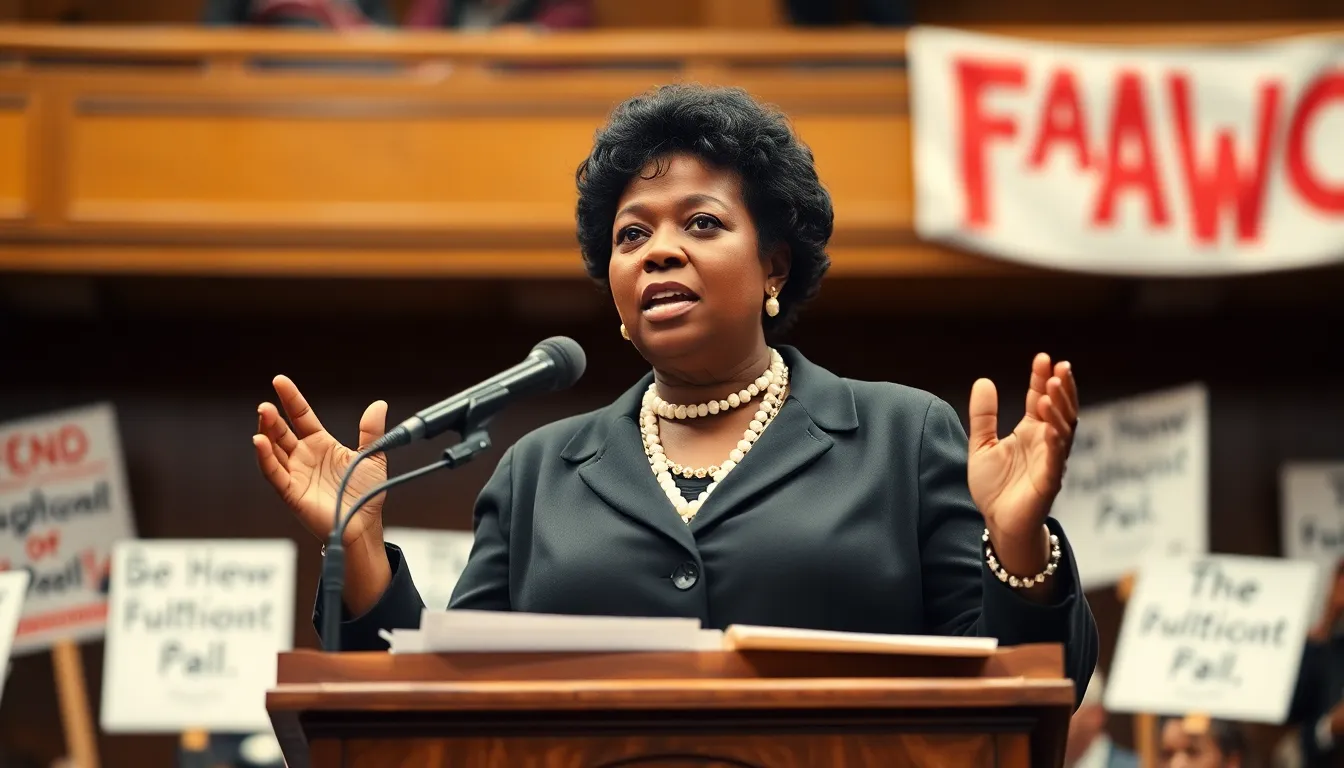
**Mississippi Freedom Democratic Party (MFDP)** – In 1964 Hamer became a founding member of the MFDP, a political organization that challenged the all‑white Mississippi Democratic Party’s monopoly on delegate selection. At the 1964 Democratic National Convention in Atlantic City, Hamer delivered a televised testimony that juxtaposed the brutal reality of Mississippi voting restrictions with the promises of American democracy. Her declaration, “I am sick and tired of being sick and tired,” resonated widely and forced the national Democratic Party to confront the state’s segregationist practices.
**March on Washington for Jobs and Freedom (1963)** – Although Hamer’s most notable national exposure occurred at the 1964 convention, she also participated in the 1963 March on Washington, where she helped organize a contingent of Mississippi women and distributed literature on voter registration.
**Later Work and Institutional Reform** – After the passage of the Voting Rights Act of 1965, Hamer continued to press for economic justice. She co‑founded the Freedom Farm Cooperative in 1967, an effort to secure land ownership and agricultural self‑sufficiency for Black families. In 1970 Hamer founded the “National Women’s Political Caucus of the South,” which sought to increase Black women’s political representation. Throughout the 1970s she travelled internationally, speaking at conferences in Europe and Africa about the American civil‑rights struggle.
Ideas, Methods, and Leadership Style
Hamer combined grassroots organizing with direct‑action protest. Her methodology emphasized personal testimony, collective worship, and strategic nonviolent resistance. She leveraged the church’s network to disseminate information, while also employing the more militant tactics of SNCC, such as “jail‑no‑bond” campaigns that deliberately filled local jails to draw attention.
Rhetorically, Hamer employed a blend of biblical allusion and plain‑spoken urgency. Her speeches often invoked biblical justice (“the Lord is a God of righteousness”) yet maintained a stark, literal description of everyday oppression. This duality gave her credibility among both faith‑based audiences and secular activists.
In leadership, Hamer favored inclusive decision‑making, encouraging women and younger volunteers to take on visible roles. She was known for her willingness to confront both external oppressors and internal disagreements, such as the strategic tensions between SNCC’s “Black Power” faction and more integrationist members.
Opposition, Criticism, and Controversies
State and local authorities repeatedly targeted Hamer. The Mississippi State Sovereignty Commission—a state‑run agency created to resist integration—maintained a dossier on Hamer, documenting surveillance, infiltration, and attempts to undermine her credibility. She faced economic reprisals, being fired from her job as a sharecropper’s laborer and later from a position at a municipal welfare office after her activism became public.
Within the civil‑rights movement, Hamer sometimes faced criticism for her confrontational style. Some leaders feared that her outspoken demands for economic redistribution could alienate moderate white allies. Others, particularly male leaders in organizations like SNCC, occasionally marginalized her contributions in internal decision‑making, a gendered dynamic that Hamer herself criticized publicly.
Despite these tensions, Hamer’s public image remained largely positive among Black communities and progressive observers. The mainstream press, notably The New York Times and The Washington Post, covered her testimony at the 1964 convention as emblematic of the moral urgency of voting‑rights reform.
Legacy and Historical Impact
Fannie Lou Hamer’s activism contributed directly to the passage of the Voting Rights Act of 1965, which outlawed discriminatory voting practices such as literacy tests and poll taxes. Her testimony at the 1964 Democratic Convention remains a touchstone in civil‑rights historiography, frequently cited in academic works on grassroots mobilization and Black women’s leadership.
In scholarship, Hamer is recognized as a prototype of “intersectional” advocacy, linking racial, gender, and economic justice. Her emphasis on land ownership and cooperative economics presaged later movements for food sovereignty and Black agrarian reform.
Posthumously, Hamer has been honored with numerous memorials: a section of Highway 49 in Mississippi bears her name, a federal building in Jackson, Mississippi was renamed the Fannie Lou Hamer Federal Building, and she was inducted into the National Women’s Hall of Fame in 1995. Her legacy endures in contemporary voting‑rights organizations such as the NAACP Legal Defense Fund, which cite her strategies in modern litigation and voter‑registration drives.
In recent years, the 2021 Supreme Court decision in Brnovich v. Democratic National Committee sparked renewed public reference to Hamer’s 1964 testimony, underscoring the persistence of voting‑rights challenges and the continued relevance of her demand for full civic participation.