Early Life and Influences
Harriet Tubman was born Araminta “Minty” Ross around March 1822 in Dorchester County, Maryland, a slaveholding region of the United States. The exact date of birth is uncertain because enslaved families were often denied official records. Her parents, Ben Ross, a field hand, and Harriet (née Green), a house servant, were of mixed African and Native American ancestry. Tubman’s early childhood was marked by the harsh realities of slavery: physical punishment, limited mobility, and a constant threat of family separation.
At approximately age seven, Tubman suffered a severe head injury when an overseer struck her with a heavy metal weight. The injury caused lifelong seizures, headaches, and narcoleptic episodes, conditions she later described as “the black hand of the devil.” Despite these health challenges, Tubman learned to read the Bible and some basic literacy from other enslaved people, gaining a foundation for later rhetoric and negotiation.
Religious faith played a central role in her early development. She attended clandestine prayer meetings and later converted to Christianity, a conversion that shaped her moral framework and provided a language of liberation that she would use throughout her public work.
Entry Into Activism or Reform
In 1844, Tubman escaped slavery, traveling over 90 miles to Philadelphia, Pennsylvania, a free state. Her successful flight was aided by members of the Underground Railroad, a loosely organized network of abolitionists, free Black citizens, and some white allies. Tubman’s escape introduced her to a community of activists committed to ending slavery, and it also highlighted the need for practical assistance to others still in bondage.
Shortly after reaching Philadelphia, Tubman returned to Maryland to rescue family members. This first rescue, undertaken in 1849, marked her transition from a fugitive to a conductor of the Underground Railroad. She adopted the name “Harriet”—a diminutive of her given name—and the moniker “Moses,” reflecting her role in guiding enslaved people to freedom.
Major Campaigns and Public Work
Underground Railroad Leadership (1849‑1859) – Over a decade, Tubman made an estimated 13–14 trips back to Maryland, leading roughly 70 enslaved individuals to freedom. She employed a variety of tactics: traveling at night, using coded songs, and coordinating with trusted allies such as William Still, Thomas Garrett, and the abolitionist community in Syracuse, New York. Each voyage required meticulous planning, including securing food, clothing, and safe houses (known as “stations”).
Civil War Service (1861‑1865) – With the outbreak of the Civil War, Tubman offered her services to the Union Army. She was commissioned as a scout, spy, and nurse. In 1863, she led the Combahee River Raid in South Carolina, which resulted in the liberation of more than 700 enslaved people and the destruction of a Confederate plantation. Tubman’s intelligence work included mapping routes and gathering information on Confederate troop movements, contributing to Union strategic planning.
Post‑War Humanitarian Efforts (1865‑1875) – After the war, Tubman focused on assisting newly freed African Americans. She advocated for land ownership, believing that economic independence was essential for true freedom. In 1869, she purchased a 175‑acre farm in Auburn, New York, where she cared for elderly relatives and former slaves. Tubman also helped establish the National Association for the Relief of Destitute Colored Women and Children, a charity that provided shelter, education, and employment assistance.
Women’s Suffrage Advocacy (late 1880s‑1913) – Tubman became an active participant in the women’s suffrage movement. She attended the 1895 National Women’s Suffrage Convention in Washington, D.C., and worked alongside leaders such as Susan B. Anthony and Elizabeth Cady Stanton. While her primary focus remained on African‑American rights, she argued that voting rights were essential for both Black and white women to achieve full citizenship.
Ideas, Methods, and Leadership Style
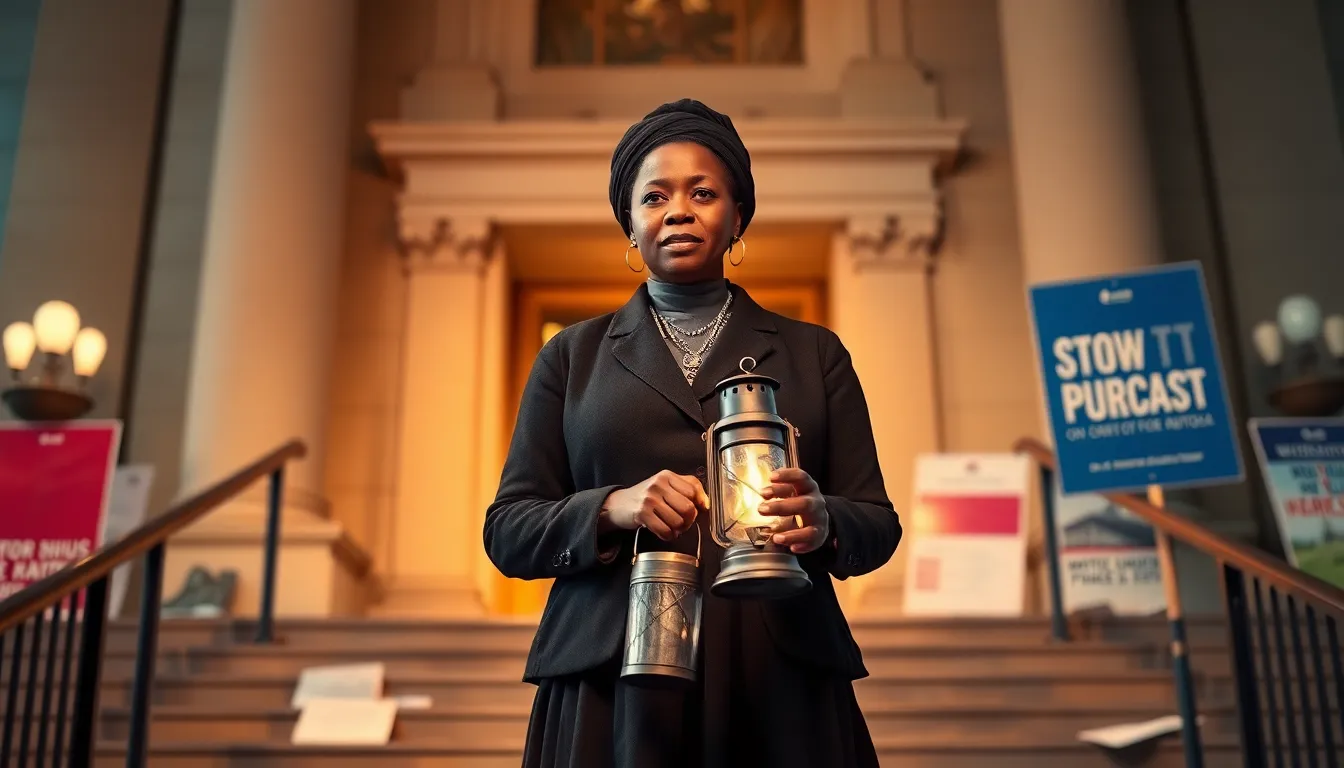
Tubman’s approach combined pragmatic logistics with moral conviction. She emphasized secrecy, using coded language, hidden compartments, and signal lights to avoid detection. Her leadership style was collaborative; she relied on a network of trusted confidants and placed great value on reciprocity—those she helped were often called upon to assist others in return. Tubman’s religious beliefs reinforced a narrative of divine purpose, which she expressed in speeches and personal correspondence.
Unlike many contemporaries who pursued legislative reform exclusively, Tubman focused on direct action. Her willingness to risk re‑arrest (the Fugitive Slave Act of 1850 made return to slavery a federal crime) demonstrated a commitment to personal risk as a strategy for broader change. In her later years, she leveraged her reputation to raise funds for causes such as the Freedmen’s Hospital in New York and the Underground Railroad’s successor organizations.
Opposition, Criticism, and Controversies
Throughout her life, Tubman faced legal and extralegal opposition. The Fugitive Slave Act criminalized assistance to escaped slaves, exposing her to potential imprisonment. While there is no record of Tubman’s formal arrest, Union and Confederate authorities monitored her activities, and Confederate soldiers placed a bounty on her head.
Historical scholarship has sometimes debated the precise numbers of people she rescued, with estimates ranging from 70 to over 300. Some historians argue that the mythic “Moses” persona, amplified in later popular memory, may have exaggerated specific details. Nonetheless, primary sources such as William Still’s “Correspondence” and contemporary newspaper accounts corroborate the core facts of her conduct.
Critics within the abolitionist movement occasionally disagreed with Tubman’s willingness to employ armed self‑defense during raids. Additionally, some suffragists marginalized her contributions because of racial bias, limiting her visibility in mainstream women’s rights histories until the late 20th century.
Legacy and Historical Impact
Harriet Tubman’s work has left an enduring imprint on American civil rights. Her Underground Railroad leadership directly weakened the institution of slavery and inspired subsequent generations of activists. The tactics she employed—covert networking, community solidarity, and direct action—have been cited by 20th‑century civil‑rights leaders, including Martin Luther King Jr. and the Freedom Riders.
Legally, Tubman’s wartime service contributed to the Union’s strategic advantage, while her post‑war advocacy informed early debates over Reconstruction policy and Black land ownership. Her involvement in the women’s suffrage movement helped broaden the movement’s racial inclusivity, a principle later revisited during the 19th Amendment campaign.
In contemporary culture, Tubman is commemorated through museums (e.g., the Harriet Tubman Home in Auburn, New York), educational curricula, and public honors such as the naming of the Harriet Tubman Memorial (“The Ladder”) on the National Mall. Scholars continue to reassess her biography, emphasizing her agency as a strategist rather than a solely symbolic martyr.
Overall, Tubman’s life illustrates the intersection of personal courage, organized resistance, and the long‑term struggle for human rights in the United States.