Early Life and Culinary Beginnings
Roy Choi was born on September 30, 1970, in Seoul, South Korea. His family emigrated to the United States when he was an infant, settling in the Koreatown district of Los Angeles, California. Growing up in a densely populated immigrant neighborhood, Choi was exposed to a blend of Korean home cooking, Mexican street fare, and the emerging fast‑casual dining scene that would later inform his culinary imagination.
Choi’s mother ran a small family business and prepared traditional Korean dishes for her children, while his father worked in a local storage facility. The household emphasized hard work and resourcefulness, traits that Choi would later cite as foundational to his entrepreneurial ethos.
After graduating from Fairfax High School in 1988, Choi briefly attended the University of California, Irvine, where he studied political science. He left university to pursue practical culinary experience, initially working as a line cook at the teenage‑run restaurant La Mar in Santa Monica. His early positions included stints at the renowned Los Angeles establishment Spago under chef Wolfgang Puck, where he observed the operations of a high‑end kitchen, and later at Patriarch, a modern American bistro, where he refined classic cooking techniques.
While Choi never earned a formal degree from a culinary institute, he completed an apprenticeship program at the Culinary Institute of America’s Los Angeles campus in the early 1990s, a credential that provided him with a solid grounding in French culinary fundamentals, knife skills, and kitchen management. He also spent time working in the kitchens of Los Angeles hotels, gaining exposure to large‑scale food production and service logistics.
These formative experiences gave Choi a broad perspective on both fine‑dining and street‑food cultures, laying the groundwork for the hybrid cuisine that would later define his career.
Breakthrough in Food or Media
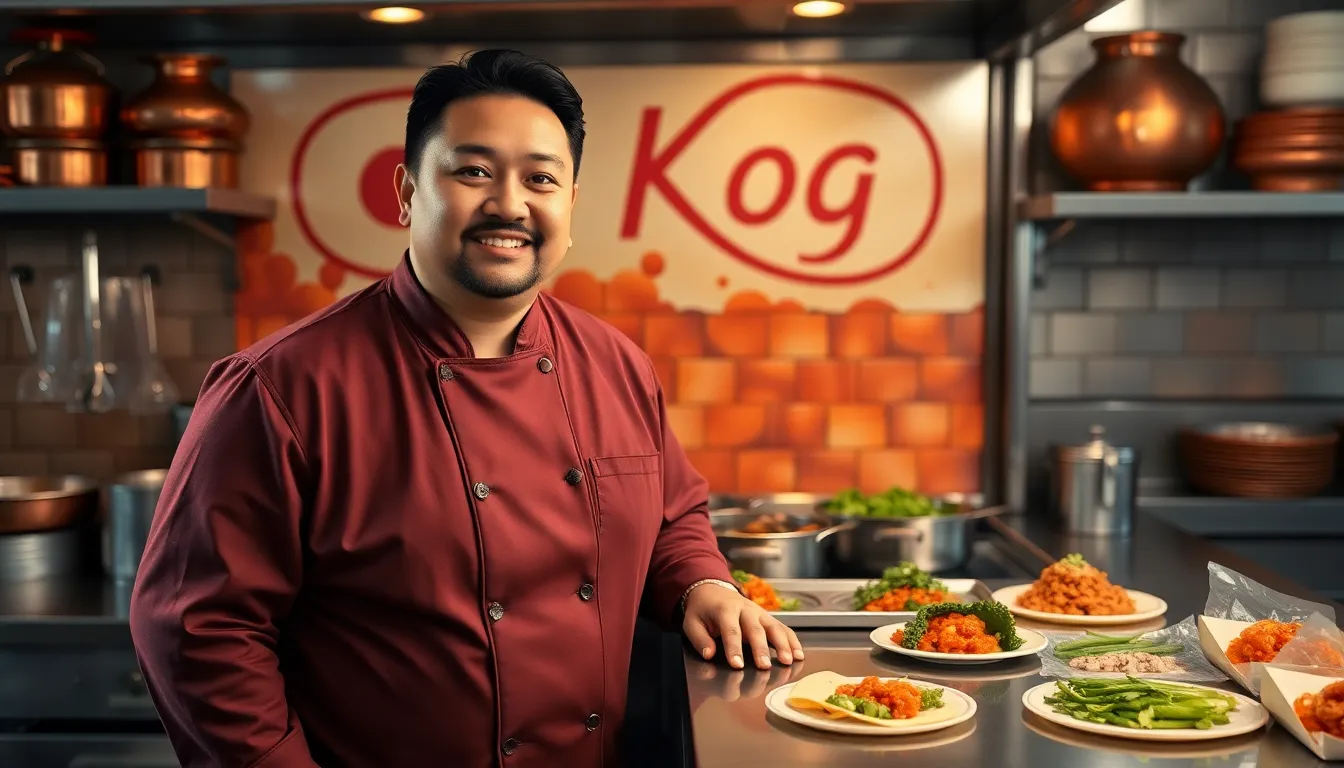
In 2008, Roy Choi co‑founded the Kogi Korean‑Mexican BBQ food truck with partner Mark Manguera. The concept was simple yet revolutionary: serve Korean‑inspired tacos, burritos, and quesadillas from a repurposed taco truck, and announce the truck’s location via Twitter and other social‑media platforms. The inaugural Kogi launch took place on July 23, 2008, at a Los Angeles downtown parking lot, and the event quickly generated a viral response, with lines extending onto the street and extensive media coverage from outlets such as the Los Angeles Times, New York Times, and major television networks.
Kogi’s signature dish—Korean BBQ short‑rib tacos topped with kimchi, cilantro, and a sesame‑seed drizzle—embodied Choi’s culinary philosophy of “mixing cultures in a respectful, delicious way.” The truck’s success is widely credited with sparking the modern food‑truck renaissance in the United States, demonstrating that a mobile kitchen could achieve national fame and influence mainstream dining trends.
Restaurants, Shows, Books, and Ventures
Kogi BBQ (2008–present) – The original food truck remains active in Los Angeles, rotating locations weekly and continuing to influence the city’s street‑food ecosystem. Kogi’s expansion includes multiple trucks and a catering arm that serves corporate and private events.
Chego! (2013–2016) – In June 2013, Choi opened Chego!, a fast‑casual Korean‑fusion restaurant in the Arts District of Los Angeles. The menu emphasized quick‑serve Korean comfort foods such as bibimbap bowls and kimchi‑fried rice, aiming to bring Korean flavors to a broader, on‑the‑go audience. Chego! closed in 2016 after three years of operation, citing the challenges of scaling a niche concept within a competitive market.
Locol (2016–2020) – Co‑founded with chef Daniel Patterson, Locol was an effort to address food insecurity through a “fast‑casual” model serving affordable, nutritionally balanced meals in underserved neighborhoods. Locol launched its first location in Los Angeles’ Echo Park in 2016 and later opened a second spot in Chicago. Both locations closed by 2020, with the venture acknowledging the difficulty of balancing social mission with economic sustainability.
Other Ventures – Choi has consulted for several hospitality groups, contributed to pop‑up concepts, and partnered with major brands on limited‑edition products (e.g., a line of Korean‑style sauces with a grocery retailer). He also co‑founded the culinary collective The Lab, a platform that supports emerging chefs through mentorship, shared kitchen space, and community events.
Television and Media Appearances – Roy Choi’s media presence grew alongside Kogi’s popularity. He appeared as a guest on Chef’s Table (Netflix, 2017) in an episode focusing on his impact on Los Angeles food culture. He served as a judge on the reality cooking competition Top Chef: All-Stars Los Angeles (Bravo, 2020) and has contributed to multiple food‑focused documentaries, including Street Food: USA (Netflix, 2022). Choi frequently appears on talk shows, podcasts, and culinary panels discussing street food, culinary activism, and the future of restaurant entrepreneurship.
Publications – In 2020, Choi released his memoir L.A. Son: A Food Lover’s Journey Through the Flavors of Los Angeles, which blends personal narrative with reflections on the city’s culinary evolution. The book received favorable reviews for its candid storytelling and insight into food‑truck operations. Choi has also contributed chapters to several collective cookbooks covering modern American cuisine, and his writings appear regularly in publications such as Bon Appétit and Food & Wine.
Cooking Style and Public Persona
Roy Choi’s cooking style is defined by a synthesis of Korean comfort foods, Mexican street fare, and American fast‑casual sensibilities. Core techniques include Korean BBQ grilling (often using the “bulgogi” method of marinating and caramelizing meat over high heat), kimchi fermentation, and the use of bold, balanced flavor components such as gochujang (Korean chili paste), sesame oil, and fresh herbs.
Rather than adhering to strict culinary traditions, Choi emphasizes adaptability and cultural dialogue. He frequently cites his Los Angeles upbringing, where Korean households shared kitchens with neighboring Mexican families, as the origin of his “cross‑cultural mash‑up” approach.
Publicly, Choi projects an energetic, approachable persona. He commonly engages with fans on social media, often inviting followers to suggest new truck locations or menu ideas. His advocacy extends to food justice, supporting community kitchens, and mentoring young chefs from under‑represented backgrounds. Choi’s media roles usually showcase his enthusiasm for mentorship and his belief that good food should be accessible to all socioeconomic groups.
Reception, Awards, and Controversies
Kogi’s emergence was met with widespread critical acclaim. Food critics praised the truck’s innovative flavor pairings, and the model of real‑time location updates via Twitter was recognized as a turning point in food‑service marketing. In 2012, Food & Wine named Roy Choi one of “America’s 10 Best New Chefs,” highlighting his impact on street food and culinary entrepreneurship.
Choi has received several honors for his contributions to the culinary community, including the 2014 James Beard Foundation “Forward” award for “His role in elevating the food‑truck model as a legitimate restaurant format.” In 2017, the Los Angeles Business Journal awarded him “Entrepreneur of the Year” for his work with Kogi and community‑focused ventures.
Controversies involving Choi have largely been centered on the financial viability of his socially driven concepts. Locol, despite its laudable mission, faced criticism for under‑pricing meals and ultimately closing its doors, leading some analysts to question the sustainability of mission‑first restaurant models. Choi has addressed these concerns openly, noting that “the goal was to prove that a profitable, community‑focused restaurant could exist, and the lessons learned are valuable for future projects.”
No major legal disputes, sexual misconduct allegations, or personal scandals have surfaced in reputable media sources as of 2026. Choi’s public statements have consistently focused on culinary innovation and community advocacy.
Legacy and Cultural Impact
Roy Choi’s influence on American food culture is multifaceted. Kogi’s success demonstrated that a mobile kitchen could achieve celebrity status, prompting an explosion of food trucks nationwide and inspiring a generation of chefs to experiment with portable, socially engaged dining concepts. The Korean‑Mexican taco has become a staple of fusion cuisine, and numerous chefs cite Choi as an early inspiration for blending Asian and Latin American flavors.
Beyond the truck, Choi’s commitment to food equity has helped shape conversations around access to healthy meals in low‑income neighborhoods. His involvement with community kitchens, mentorship programs, and public policy panels has contributed to a broader awareness of the role of chefs as civic leaders.
Academically, Choi’s career is often referenced in culinary studies as a case study of how social media can disrupt traditional restaurant models and how cultural hybridity can be leveraged to develop new culinary identities. His memoir offers primary source material for scholars examining the evolution of Los Angeles’ food scene from the late 20th century to the present.
In sum, Roy Choi remains a pivotal figure in contemporary American gastronomy, recognized for pioneering the food‑truck renaissance, championing cross‑cultural cuisine, and advancing food‑justice initiatives.