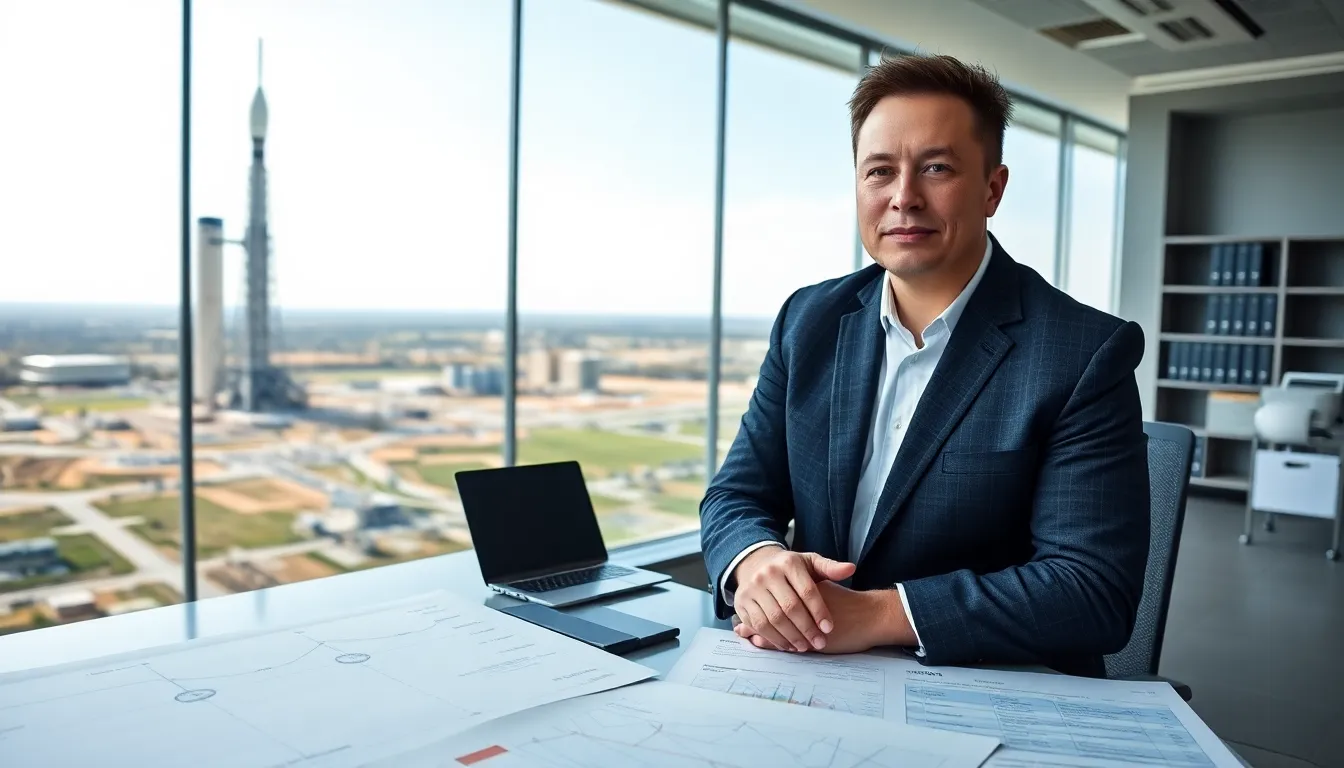
Early Life and Education
Elon Reeve Musk was born on 28 June 1971 in Pretoria, South Africa, to Maye (née Haldeman), a Canadian‑born dietitian and model, and Errol Musk, a South African electromechanical engineer. His paternal grandfather, Joshua Haldeman, was a successful entrepreneur and adventurer whose stories of exploration influenced Musk’s later ambition to colonise other planets. Musk attended Waterkloof House Preparatory School and later graduated from Pretoria Boys High School, where he developed an early interest in computers, teaching himself programming at the age of 10 and selling a basic space‑flight simulation game called Blastar for approximately US$500.
In 1989, at age 17, Musk left South Africa to avoid compulsory military service and to pursue broader opportunities. He first enrolled at Queen’s University in Kingston, Ontario, Canada, spending two years there before transferring to the University of Pennsylvania. At Penn, he earned a dual‑degree: a Bachelor of Science in Physics from the College of Arts and Sciences and a Bachelor of Science in Economics from the Wharton School. His academic record reflected a blend of technical rigor and business acumen, laying the groundwork for his later ability to bridge engineering concepts with market‑driven strategies.
After graduating in 1995, Musk enrolled in a Ph.D. program in applied physics and materials science at Stanford University, California. He abandoned the program after two days, believing that the internet’s burgeoning commercial potential presented a more immediate opportunity to create economic value. This decisive pivot marked the beginning of his entrepreneurial career.
First Ventures and Breakthrough
In 1995, Musk co‑founded Zip2, a city‑guide software company, with his brother Kimbal. Zip2 provided online business directories and maps for newspapers, a novel service at a time when the World Wide Web was still in its infancy. The company secured a $3 million investment from the venture capital firm Mohr Davidow Ventures in 1996, giving Musk his first experience raising external capital. By 1999, Compaq acquired Zip2 for $307 million in cash and $34 million in stock options. Musk’s share of the deal netted him roughly $22 million, providing the seed capital for his next ventures.
Shortly after the Zip2 sale, Musk founded X.com, an online payment company, in March 1999. X.com’s aggressive growth strategy focused on integrating email payments, e‑check processing, and a proprietary fraud‑prevention system. By early 2000, X.com merged with Confinity, which operated the money‑transfer service PayPal. Internal disagreements over branding and strategic direction led to Musk’s removal as CEO, but he retained a 7.5 % stake in the combined entity. In October 2002, eBay acquired PayPal for $1.5 billion in stock, making Musk’s former stake worth approximately $165 million.
These early ventures demonstrated Musk’s pattern of identifying nascent digital markets, building technology platforms, and leveraging high‑growth capital to achieve rapid exits. The proceeds from PayPal funded his entry into the aerospace and renewable‑energy sectors, where he would pursue longer‑term, capital‑intensive visions.
Companies, Strategy, and Leadership
In 2002, Musk founded Space Exploration Technologies Corp., known as SpaceX, with the explicit aim of reducing the cost of space travel and eventually enabling human settlement on Mars. He invested $100 million of his own capital and recruited a core team of aerospace engineers from established firms such as Lockheed Martin and Boeing. The company’s first rocket, the Falcon 1, suffered three consecutive launch failures before achieving orbit on its fourth attempt in September 2008. This breakthrough validated SpaceX’s reusable‑rocket architecture and attracted a $1.6 billion NASA contract under the Commercial Orbital Transportation Services (COTS) program.
SpaceX’s business model diverges from traditional aerospace contractors by vertically integrating design, manufacturing, and launch services, thereby lowering overhead and enabling rapid iteration. The Falcon 9, introduced in 2010, featured a first stage designed for controlled re‑entry and vertical landing. Reusability became a cornerstone of SpaceX’s cost‑reduction strategy; by 2020 the company had successfully landed and reflown dozens of first‑stage boosters, cutting launch costs by up to 30 % relative to expendable competitors.
In parallel, Musk launched Tesla, Inc. (originally Tesla Motors) in 2004, investing $6.5 million and assuming the role of chairman. By 2008, he had taken over as CEO and product architect. Tesla’s early strategy centered on high‑performance electric sports cars (the Roadster) to build brand prestige and fund the development of a mass‑market vehicle (the Model S). The company’s vertically integrated approach—encompassing battery cell production, powertrain engineering, and a direct‑to‑consumer sales model—challenged the entrenched automotive supply chain. Tesla’s 2012 IPO raised $226 million, and its market capitalization surpassed traditional automakers within a decade, illustrating Musk’s ability to reshape capital markets around disruptive technology narratives.
Beyond SpaceX and Tesla, Musk has initiated or sponsored additional ventures: SolarCity (founded 2006, later merged into Tesla as its solar division), The Boring Company (2016), Neuralink (2016), and OpenAI (co‑founder, 2015). Each venture reflects a common strategic thread: targeting high‑risk, long‑term problems—urban traffic congestion, renewable‑energy storage, neural‑interface technology—while leveraging Musk’s personal brand and a willingness to raise capital through a mix of venture funding, public markets, and private equity.
Musk’s leadership style is often described as demanding, data‑driven, and hands‑on. He is known for setting ambitious, sometimes “hard‑to‑achieve” timelines (e.g., the 12‑month development schedule for the Model 3) and encouraging a culture of rapid prototyping. Critics argue that this approach can generate excessive employee turnover and lead to burnout, while supporters cite the resulting breakthroughs and accelerated product cycles as evidence of effectiveness.
Wealth, Public Image, and Controversies
Estimates of Musk’s net worth fluctuate with Tesla’s stock price and the valuation of his privately held companies. As of mid‑2024, major financial publications such as Bloomberg and Forbes estimated his wealth between US$190 billion and US$230 billion, intermittently ranking him among the world’s richest individuals. Much of this wealth is illiquid, tied to equity stakes in publicly traded entities (Tesla, SpaceX – privately held but periodically valued) and occasional cryptocurrency holdings.
Musk’s public image is shaped by a mixture of admiration for his technological ambition and criticism for his communication style. He maintains a prolific presence on social media, particularly Twitter (rebranded as X in 2023). His tweets have moved markets—most famously a 2020 tweet about taking Tesla private at $420 per share prompted a Securities and Exchange Commission (SEC) investigation, resulting in a $20 million fine and a requirement that his public statements be pre‑approved by a company lawyer.
Labor relations have been a recurring source of controversy. In 2022, the United Auto Workers (UAW) announced an organizing campaign targeting Tesla’s Fremont, California, factory, citing concerns over safety, overtime, and anti‑union tactics. Tesla’s response included legal challenges and public statements defending its direct‑employment model. Similarly, SpaceX has faced scrutiny over workplace culture, with former employees reporting high pressure and limited work‑life balance.
Regulatory challenges have also arisen. SpaceX’s launch activities are subject to Federal Aviation Administration (FAA) licensing, and the company has faced investigations related to environmental impact assessments for its Boca Chica (now Starbase) launch site in Texas. Tesla has been investigated by the National Highway Traffic Safety Administration (NHTSA) over Autopilot‑related accidents, prompting ongoing debates about autonomous‑driving safety standards.
These controversies illustrate the tension between Musk’s rapid‑innovation ethos and established regulatory, labor, and market norms. While his ventures have generated substantial economic activity and technological progress, they have also highlighted the ethical and governance challenges inherent in scaling disruptive enterprises.
Philanthropy, Legacy, and Industry Impact
In 2012, Musk signed the Giving Pledge, committing to donate the majority of his wealth to charitable causes. His philanthropic activities are largely channeled through the Musk Foundation, which focuses on renewable‑energy research, pediatric health, and science education. Notable contributions include a US$10 million donation to the Sierra Club’s “Beyond Coal” campaign (2023) and funding for the development of a hyper‑fast tunnel for the Los Angeles–San Diego corridor through The Boring Company’s “Not‑A‑Rebel” initiative.
The long‑term industry impact of Musk’s enterprises is substantial. SpaceX has restored competition in the launch market, driving down prices and prompting legacy contractors (United Launch Alliance, Arianespace) to pursue reusability and cost‑efficiency measures. The company’s development of the Starlink satellite constellation has introduced a global broadband service that challenges traditional telecom operators, while also raising concerns over orbital debris and spectrum allocation.
Tesla’s acceleration of electric‑vehicle (EV) adoption reshaped automotive supply chains, spurred the growth of battery‑manufacturing ecosystems, and prompted legacy automakers to announce ambitious electrification roadmaps. Tesla’s direct‑to‑consumer sales model and over‑the‑air software updates have forced regulatory bodies to reconsider dealership laws and vehicle certification processes.
Beyond specific sectors, Musk’s entrepreneurial narrative has influenced broader business culture. He exemplifies a hybrid founder‑CEO model that leverages personal brand, media savviness, and a willingness to commit personal capital to high‑risk ventures. His public articulation of “first‑principles” thinking has become a popular framework in startup education, though critics argue that it can obscure the contributions of broader teams and external partners.
In sum, Elon Musk’s career embodies a distinctive blend of visionary ambition, capital‑intensive engineering, and aggressive market disruption. While his methods invite both praise and critique, the measurable outcomes—reduced launch costs, accelerated EV adoption, and the mainstreaming of private spaceflight—indicate a lasting transformation of multiple high‑technology industries.