Early Life and Education
Ralph Lifshitz was born on October 14, 1939, in the Bronx, New York City, to a Jewish immigrant family from the Austro‑Hungarian Empire. His father, Floyd Lifshitz, worked as a dress pattern cutter, while his mother, Gerta, was a housewife. The family relocated to the Queens neighborhood of Astoria when Lauren was seven, a move that exposed him to a broader socioeconomic mix.
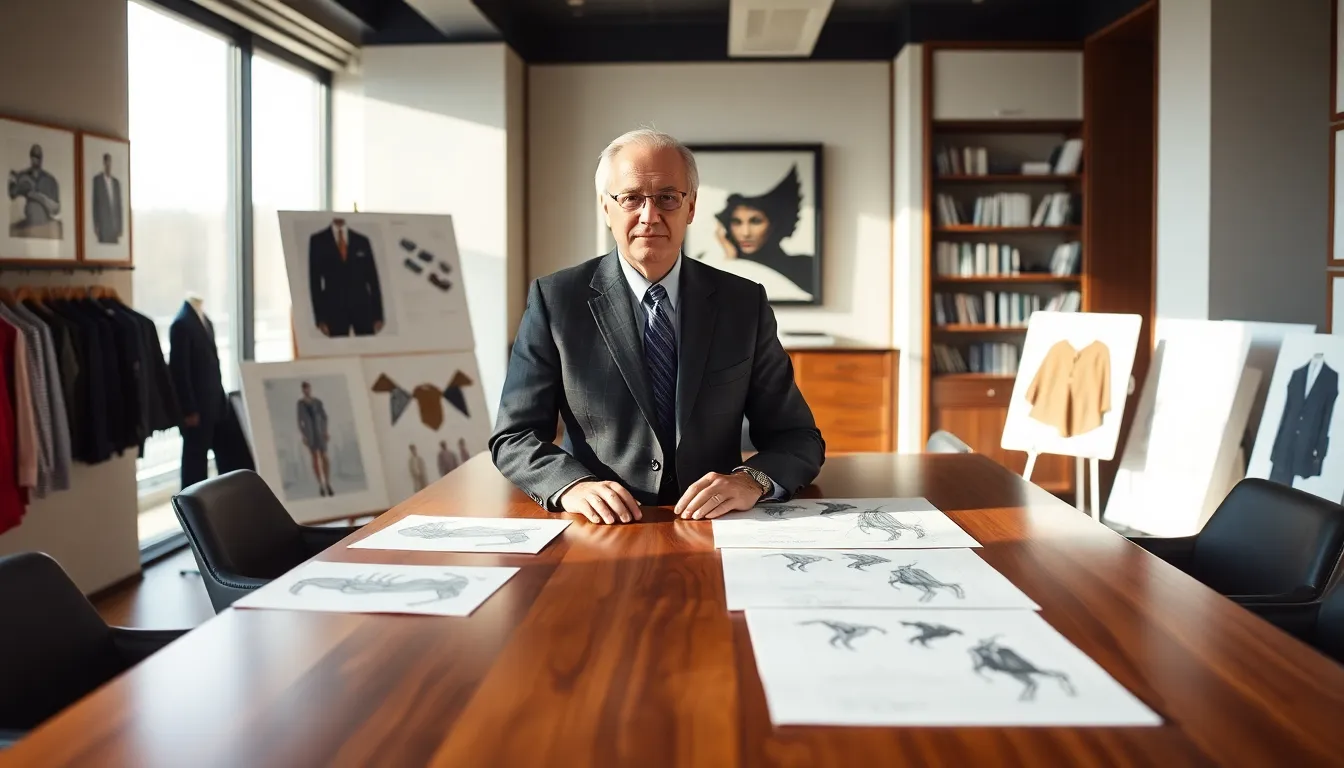
Lauren attended DeWitt Clinton High School, where he developed an early fascination with clothing and retail displays, often sketching outfits for classmates. After graduating in 1957, he enrolled at Baruch College (now Baruch College, City University of New York) to study business. He left after two years to join the U.S. Army Reserve, a stint that lasted until 1962. The combination of a business education, military discipline, and exposure to New York’s merchandising landscape laid a foundation for his later entrepreneurial pursuits.
First Ventures and Breakthrough
In 1962, Lauren secured an entry‑level sales position at Brooks Brothers, one of America’s oldest apparel firms. Working in the tie department, he learned the intricacies of product development, sourcing, and the importance of brand storytelling. Within a year, he was promoted to a sales assistant role in the menswear department, and his ambition to design his own line grew.
In 1967, with a modest $50,000 investment from friends and family, Lauren launched a line of neckties under the label “Polo”—an homage to the sport he admired. He personally sketched each design and sourced silk from Italy, differentiating his offerings through a distinct, upscale aesthetic. The ties were sold through department stores such as Bloomingdale’s and Saks Fifth Avenue. By 1970, the Polo tie collection generated $2 million in sales, catching the attention of industry insiders.
Lauren’s breakthrough arrived in 1971 when he presented a full menswear collection to men’s retailer Bloomingdale’s. The collection, featuring polo shirts, tailored coats, and sport‑inspired accessories, was marketed under the brand name “Ralph Lauren”—a strategic rebranding that replaced his birth surname with a more Anglophone-friendly moniker. The debut line, modeled after the aristocratic British sporting tradition, resonated with affluent American consumers seeking a lifestyle narrative rather than merely clothing.

Companies, Strategy, and Leadership
Following the success of the 1971 collection, Lauren founded the Polo Ralph Lauren Corporation in 1972, formally incorporating the business. The company’s early strategy centered on vertical integration: designing, sourcing, manufacturing, and retailing under a single brand identity. This allowed tight control over quality and brand messaging.
Key milestones include:
- 1972–1975: Expansion of menswear lines, introduction of the iconic polo shirt with an embroidered pony. Distribution grew from 15 department stores to over 100.
- 1976: Launch of the women’s collection, extending the Polo aesthetic to a broader demographic.
- 1981: Opening of the first flagship store on Fifth Avenue, New York, cementing the brand’s luxury positioning.
- 1986: Introduction of the Fragrance and Home divisions, diversifying revenue streams.
- 1997: Initial public offering (IPO) on the New York Stock Exchange (NYSE: RL) raising $2.6 billion, providing capital for global expansion.
- 2000s: Acquisitions of Club Monaco (1999) and the licensing of the Polo brand for accessories, eyewear, and home furnishings.
Lauren’s leadership style blended creative vision with disciplined financial management. He emphasized storytelling, positioning every product as part of an aspirational “American Dream” narrative. Decision‑making often involved in‑house design teams, rigorous market testing, and a cautious approach to debt—maintaining an equity‑centric balance sheet even after rapid expansion.
Operationally, the company adopted a “design‑first” model, where product concepts were developed before securing manufacturing capacity. This contrasted with many contemporaries who built supply chains first. Lauren’s emphasis on high‑quality fabrics—especially Italian wool and cashmere—enabled premium pricing and cultivated a loyal high‑income customer base.
The brand’s global expansion leveraged licensing agreements, allowing rapid market entry while limiting capital exposure. By the mid‑2000s, the Polo Ralph Lauren logo was visible in over 100 countries, with over 500 retail locations, and a licensed network exceeding 2,500 stores.
Wealth, Public Image, and Controversies
Ralph Lauren’s personal wealth is closely tied to his equity stake in the publicly traded corporation. Bloomberg and Forbes have repeatedly listed his net‑worth estimates between US$5 billion and US$6 billion, making him one of the richest American fashion entrepreneurs. These figures are estimates based on disclosed shareholdings and market valuation.
Public image has been cultivated through a blend of lifestyle marketing—advertising campaigns featuring aspirational settings such as country clubs and equestrian events—and philanthropy. However, the brand has faced criticism on several fronts:
- Labor Practices: In the early 2000s, NGOs raised concerns about sweatshop conditions in supplier factories in Southeast Asia. Polo Ralph Lauren responded by joining the Fair Labor Association and publishing annual Corporate Social Responsibility (CSR) reports.
- Cultural Appropriation: Critics have argued that the “American West” aesthetic exploits Native American motifs without meaningful engagement. The company has since partnered with tribal organizations for specific limited‑edition collections.
- Tax Strategies: Investigative reports in 2014 highlighted the use of offshore subsidiaries to minimize U.S. tax liabilities. While legal, the practice drew public scrutiny.
Despite these controversies, Lauren has maintained a reputation for personal modesty; he rarely gives interviews and often emphasizes the collective effort of his design and retail teams.
Philanthropy, Legacy, and Industry Impact
Lauren’s philanthropic activities are channeled primarily through the Ralph Lauren Corporate Foundation, established in 1999. The foundation focuses on education, health, and arts initiatives. Notable contributions include:
- US$30 million to the Museum of Modern Art (MoMA) for the renovation of its design wing.
- US$10 million to the City University of New York (CUNY) for a fashion design scholarship program.
- Support for the American Heart Association, leveraging the brand’s “Polo” symbol to promote cardiovascular health campaigns.
The broader industry impact of Ralph Lauren is substantial. He pioneered the “lifestyle branding” model, where a single aesthetic narrative pervades clothing, accessories, home goods, and even real estate (e.g., the flagship flagship store on Madison Avenue doubles as an exhibition space). This approach has been emulated by brands such as Tommy Hilfiger, Calvin Klein, and later, luxury conglomerates like LVMH.
Academically, Lauren’s business case studies appear in MBA curricula for illustrating brand equity development, vertical integration, and controlled licensing. His influence extends to cultural perception: the “Polo” shirt remains an enduring symbol of casual American luxury, and the brand’s association with the “American Dream” narrative continues to shape consumer expectations worldwide.
In succession planning, Lauren appointed his son, Andrew Lauren, as executive vice president of the company in 2015, signaling a gradual transition. However, the board remains dominated by long‑standing executives, ensuring continuity of the founder’s design philosophy.
Overall, Ralph Lauren’s career illustrates how a clear aesthetic vision, disciplined financial strategy, and strategic use of licensing can transform a niche product into a multi‑billion‑dollar global enterprise.